Sure, those are valid things to get "nervous" about, but that's also possible with other pots and pans. Usually cooktop glass is hard enough to withstand metal moving on top of it, as long as you don't deliberately try to scratch it.
As for the abrasiveness, I have a cast iron pan that's coated with I think enamel at the bottom only. Not sure how common that is. But I also haven't had problems with the ones that are not coated.
The weight is definitely a good point - handling them is a bit more difficult than the "lighter" pans, that can't be argued away.
Haha, okay, if you're juggling with your pans... But I also wouldn't recommend doing that with other pots and pans, I don't think the cooktop would handle them that much better.
I also can't really come up with reasonable uses for excess power, there is only so much a household can use.
I just looked up the law and it's even more fucked up than I remember. It only applies to installations with > 2 kWp, so the famous Balkonkraftwerke are not affected.
As long as you don't have a smart meter (only about 5% of homes in Germany have a smart meter yet, disregard the 23.3% "Pflicht-Rollout", they are misleading)), you are only allowed to feed up to 60% of the installed power back to the grid (e.g. if you have 10 kWp installed, and you generate an excess of more than 6 kW, you have to limit its output so that you only feed 6 kW to the grid).
The regulations for installations with a smart meter also changed, the details are too convoluted for me to really care, but in the end the new law aims to reduce solar power output during "noon"/peak production hours.
There are several reasons this annoys me, but the worst is, that the grid is not really "overloaded", it's mostly just that coal/oil/gas power plants don't get regulated down as much.
Take, for example, this months electricity generation in Germany (You can click on the legend below to filter out generation types) - even though solar, wind and biomass is regularly able to provide enough power to meet demand for several hours a day, fossil fuel power plants are running during those times. Even gas, which supposedly is so flexible and only there to provide power when necessary.
Anyway, this is getting way too long already - the blame is put on solar and renewables, when it is also fossil fuel power plants that are not properly regulated.
That's an interesting concept, sounds similar to the german WG (Wohngemeinschaft), but that's, to my knowledge, also mostly used by younger people that are still studying or similar.
Should have mined bitcoin.
And since we're already straying off topic, germany "recently" introduced a law where you have to limit rooftop solar production to 60% of the installed peak power (you're not allowed to feed more than that back to the grid). Now I'm wondering whether I should start mining bitcoin at my parents place, despite my disgust for bitcoin. I'll have to see whether I can get some E-waste to put together an appropriate rig, I'm definitely not getting new hardware for that, if at all.
I can't help with stainless steel pans, but just wanted to add my two cents to
I don’t want cast iron, because it’s more likely to break the glass-topped induction cooktop.
I've been using cast iron pans on glass-topped (induction or not) cooktops with no problems whatsoever. I don't see how they would cause more or less damage to the glass surface than other pans.
But I do understand that they're not very suited for shared usage with housemates that don't take proper care of them.
Sag das bloß nicht zu laut, sonst kommt wieder der Lynchmob und will die Veganer essen.
Das Tolle ist ja auch, dass die Diskussion sich mit dem Artikel verschoben hat von "weniger Fleisch, um das Klima zu schützen" zu "weniger Fleisch, damit wir es trotz der Auswirkungen des Klimawandels noch essen können". Kann man sich echt nicht ausdenken.
Ich find's auch bezeichnend, dass der Forscher schon vor der eigentlichen Aussage zurückrudert und sagt "man kann niemandem Fleisch verbieten". Vor allem, da der Artikel davor warnt, dass man bei Ernteausfällen Soja aus Ländern importieren muss, "die dafür Regenwald abholzen". Haben die mal ausm Fenster geschaut? Das passiert schon lange, und Fleischkonsum ist mit einer der Hauptgründe, warum der Regenwald verschwindet.
Aber klar, bei großflächigen Ernsteausfällen denke ich auch zuerst daran, wie ich in Zukunft noch an mein Fleisch komme, nicht, wie die Ernteausfälle und deren Ursachen zu bekämpfen wären...
That's a very unfortunate shortening of the title - it's not sea levels, but rising sea temperatures that are causing the problems. Just like with thermal plants everywhere. In Europe the rivers get too hot to provide adequate cooling for the plants, so they face the same problem
I'm curious whether the 2000 Watt goal can be achieved without some kind of "degrowth", but it's hard to argue with the current approach, as it still sounds so much better than what most other nations are doing.
As for housing and apartment sizes, I think that's a trend that's visible in almost all developed nations. I'm not sure how it was in other European countries, but at least in Germany up until a few generations ago it was not that uncommon to live in a house with multiple generations. (That's a point that maybe doesn't really belong here, but one could argue that there is no "real" housing crisis - in the sense that it's self-inflicted - as living space per person and the size of apartments have been increasing over the last few decades, so obviously there won't be enough housing)
I wish that concept was more well-known. I think I stumbled upon it the first time when I read the ministry for the future. However that concept includes stuff that makes people get defensive very quickly. E.g. switching to a vegan diet, reducing reliance on cars or sharing living spaces with more people (I guess the last one is so far out there that many don't even consider it).
Some of those things can probably be achieved otherwise, but it's going to take way more resources than ... well, not doing those things. Electric cars require more resources than public transport, reducing energy for heating per person requires more insulation if you live alone...
Does the implementation of this in Switzerland include approaches relating to degrowth or is it mostly based on technological improvements?
Yep. I mean... the wikipedia article is right there, linked in the comment... according to it, Switzerland had a primary energy consumption of 5.1 kW per person in 2008 and reached 4 kW per person in 2020. So still quite some way to go
It's 2 kW total primary energy consumption, including everything. Transportation, industrial production, food production, your own electricity consumption, everything
The thing is, not even open loop cooling systems "use" that much water. The water is returned to the cycle after usage. So it shouldn't be a problem, unless they contaminate that water somehow, which actually does not even sound that unlikely...

Sure, those are valid things to get "nervous" about, but that's also possible with other pots and pans. Usually cooktop glass is hard enough to withstand metal moving on top of it, as long as you don't deliberately try to scratch it.
As for the abrasiveness, I have a cast iron pan that's coated with I think enamel at the bottom only. Not sure how common that is. But I also haven't had problems with the ones that are not coated.
The weight is definitely a good point - handling them is a bit more difficult than the "lighter" pans, that can't be argued away.
Haha, okay, if you're juggling with your pans... But I also wouldn't recommend doing that with other pots and pans, I don't think the cooktop would handle them that much better.
I also can't really come up with reasonable uses for excess power, there is only so much a household can use.
I just looked up the law and it's even more fucked up than I remember. It only applies to installations with > 2 kWp, so the famous Balkonkraftwerke are not affected.
As long as you don't have a smart meter (only about 5% of homes in Germany have a smart meter yet, disregard the 23.3% "Pflicht-Rollout", they are misleading)), you are only allowed to feed up to 60% of the installed power back to the grid (e.g. if you have 10 kWp installed, and you generate an excess of more than 6 kW, you have to limit its output so that you only feed 6 kW to the grid).
The regulations for installations with a smart meter also changed, the details are too convoluted for me to really care, but in the end the new law aims to reduce solar power output during "noon"/peak production hours.
There are several reasons this annoys me, but the worst is, that the grid is not really "overloaded", it's mostly just that coal/oil/gas power plants don't get regulated down as much.
Take, for example, this months electricity generation in Germany (You can click on the legend below to filter out generation types) - even though solar, wind and biomass is regularly able to provide enough power to meet demand for several hours a day, fossil fuel power plants are running during those times. Even gas, which supposedly is so flexible and only there to provide power when necessary.
Anyway, this is getting way too long already - the blame is put on solar and renewables, when it is also fossil fuel power plants that are not properly regulated.
That's an interesting concept, sounds similar to the german WG (Wohngemeinschaft), but that's, to my knowledge, also mostly used by younger people that are still studying or similar.
And since we're already straying off topic, germany "recently" introduced a law where you have to limit rooftop solar production to 60% of the installed peak power (you're not allowed to feed more than that back to the grid). Now I'm wondering whether I should start mining bitcoin at my parents place, despite my disgust for bitcoin. I'll have to see whether I can get some E-waste to put together an appropriate rig, I'm definitely not getting new hardware for that, if at all.
I can't help with stainless steel pans, but just wanted to add my two cents to
I've been using cast iron pans on glass-topped (induction or not) cooktops with no problems whatsoever. I don't see how they would cause more or less damage to the glass surface than other pans.
But I do understand that they're not very suited for shared usage with housemates that don't take proper care of them.
Even better is "Haare wachsen lassen". One meaning is letting your hair grow, the other is waxing your hair. Pronounced exactly the same
I like your positive outlook on things, even if I personally don't share it. I hope you can keep it :)
Sag das bloß nicht zu laut, sonst kommt wieder der Lynchmob und will die Veganer essen.
Das Tolle ist ja auch, dass die Diskussion sich mit dem Artikel verschoben hat von "weniger Fleisch, um das Klima zu schützen" zu "weniger Fleisch, damit wir es trotz der Auswirkungen des Klimawandels noch essen können". Kann man sich echt nicht ausdenken.
Ich find's auch bezeichnend, dass der Forscher schon vor der eigentlichen Aussage zurückrudert und sagt "man kann niemandem Fleisch verbieten". Vor allem, da der Artikel davor warnt, dass man bei Ernteausfällen Soja aus Ländern importieren muss, "die dafür Regenwald abholzen". Haben die mal ausm Fenster geschaut? Das passiert schon lange, und Fleischkonsum ist mit einer der Hauptgründe, warum der Regenwald verschwindet.
Aber klar, bei großflächigen Ernsteausfällen denke ich auch zuerst daran, wie ich in Zukunft noch an mein Fleisch komme, nicht, wie die Ernteausfälle und deren Ursachen zu bekämpfen wären...
That's a very unfortunate shortening of the title - it's not sea levels, but rising sea temperatures that are causing the problems. Just like with thermal plants everywhere. In Europe the rivers get too hot to provide adequate cooling for the plants, so they face the same problem
I'm curious whether the 2000 Watt goal can be achieved without some kind of "degrowth", but it's hard to argue with the current approach, as it still sounds so much better than what most other nations are doing.
As for housing and apartment sizes, I think that's a trend that's visible in almost all developed nations. I'm not sure how it was in other European countries, but at least in Germany up until a few generations ago it was not that uncommon to live in a house with multiple generations. (That's a point that maybe doesn't really belong here, but one could argue that there is no "real" housing crisis - in the sense that it's self-inflicted - as living space per person and the size of apartments have been increasing over the last few decades, so obviously there won't be enough housing)
I wish that concept was more well-known. I think I stumbled upon it the first time when I read the ministry for the future. However that concept includes stuff that makes people get defensive very quickly. E.g. switching to a vegan diet, reducing reliance on cars or sharing living spaces with more people (I guess the last one is so far out there that many don't even consider it).
Some of those things can probably be achieved otherwise, but it's going to take way more resources than ... well, not doing those things. Electric cars require more resources than public transport, reducing energy for heating per person requires more insulation if you live alone...
Does the implementation of this in Switzerland include approaches relating to degrowth or is it mostly based on technological improvements?
Yep. I mean... the wikipedia article is right there, linked in the comment... according to it, Switzerland had a primary energy consumption of 5.1 kW per person in 2008 and reached 4 kW per person in 2020. So still quite some way to go
It's 2 kW total primary energy consumption, including everything. Transportation, industrial production, food production, your own electricity consumption, everything
You don't need AI for that. Automated phone answering systems do exist, and can redirect people.
There also is a deposit on glass bottles in germany. Just not on all of them, but the same applies to plastic bottles
7.65 GW? That's insane! What are they trying to do there, burn a hole into the ground? Time travel?
And considering that gas power plants are roughly as bad as coal when leaked methane is included, this graphic from the article is really troubling: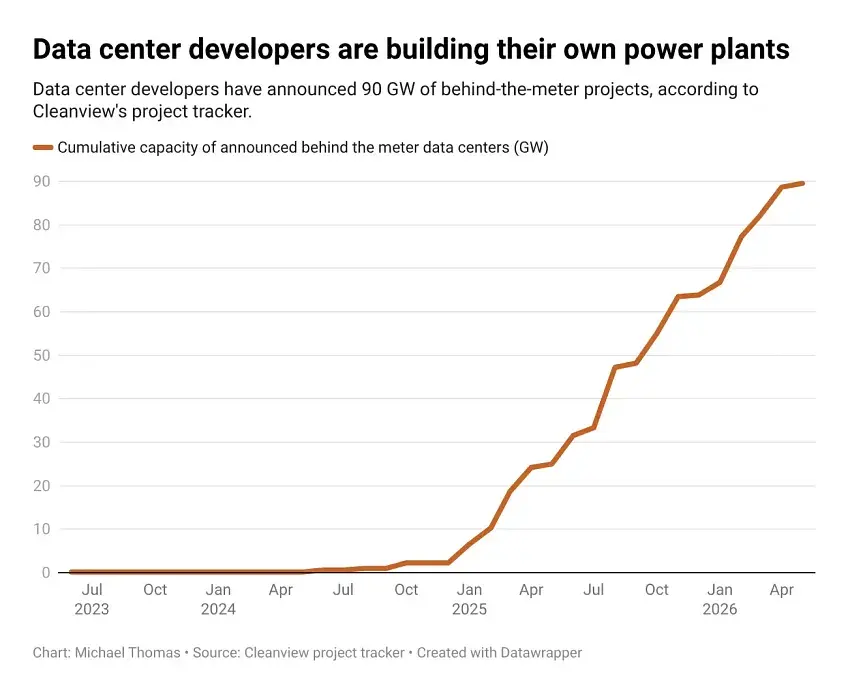
90 GW pure gas powered data centers. That's more than Germanys total electricity usage. I hope the bubble bursts before they burn as all.
And I was worried it had something to do with the new anti-bot measures
I don't really expect to reach you with this, but it's worth a try - https://slrpnk.net/comment/23703343
I hope I won't regret this, this is already the second time https://slrpnk.net/comment/23703343
The thing is, not even open loop cooling systems "use" that much water. The water is returned to the cycle after usage. So it shouldn't be a problem, unless they contaminate that water somehow, which actually does not even sound that unlikely...
Anyways, thermal power plants often use open loop cooling systems, and their water "usage" is also fairly small compared to agriculture. You can see either here https://pubs.usgs.gov/circ/1441/circ1441.pdf or in the way too long comment I wrote https://slrpnk.net/comment/23703343