This shift wasn’t just about making cars that used less gas. It was the beginning of a revolution in how we think about transportation. Car companies started experimenting with aerodynamic shapes, lighter materials, and alternative power sources. The 1970s oil crisis didn’t just lead to temporary changes – it started a long journey toward the electric vehicles we see today.
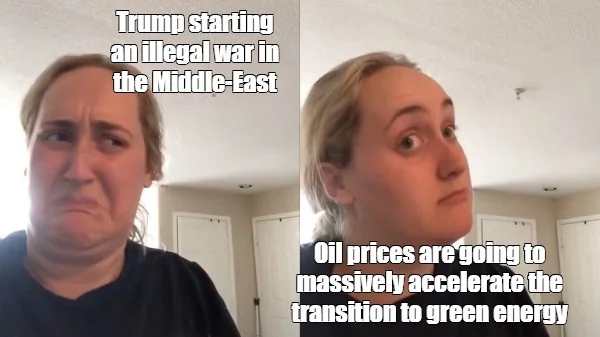
The biggest legacy of the global energy crisis triggered by Russia's invasion of Ukraine may be that it accelerates the end of the fossil fuel era - with IEA projections now showing that under today's policy settings, demand for oil, gas and coal is set to peak within the decade.

8 Comments
heyWhatsay@slrpnk.net · 8 pts · 180d
US auto makers will be advancing production of vehicles fueled by clean coal.
Wakmrow@lemmy.world · 5 pts · 180d
At the cost of Iranian people. And children.
Eyekaytee@aussie.zone · -1 pts · 180d
iranian people want the irgc gone
surewhynotlem@lemmy.world · 3 pts · 180d
That won't happen until they've bled every penny from our pockets.
village604@adultswim.fan · -1 pts · 180d
The oil companies are already transitioning to renewables.
bluGill@fedia.io · 1 pts · 180d
We have had them since the 1970s (at least). It doesn't seem to have made much a difference.
Eyekaytee@aussie.zone · 2 pts · 180d
I wouldn't say that! After the 70's oil crisis:
https://enginestories.com/history/oil-crisis-to-electric-revolution-how-fuel-shaped-car-design/
After the Russian invasion of Ukraine:
https://www.iea.org/topics/russias-war-on-ukraine
and now:
Starmer’s answer to Iran energy shock: Go green faster
https://aussie.zone/post/30430005
Anyone doubling down on gas and oil in the middle of a gas and oil crisis will look silly
MedicPigBabySaver@lemmy.world · 1 pts · 180d
No