Phaeocalicium polyporaeum is a tiny mycoparasitic fungus, seen here on its most common host, Trichaptum cf biforme, although it has also been reported on Trametes versicolor.
Phaeocalicium polyporaeum "fairy pins"
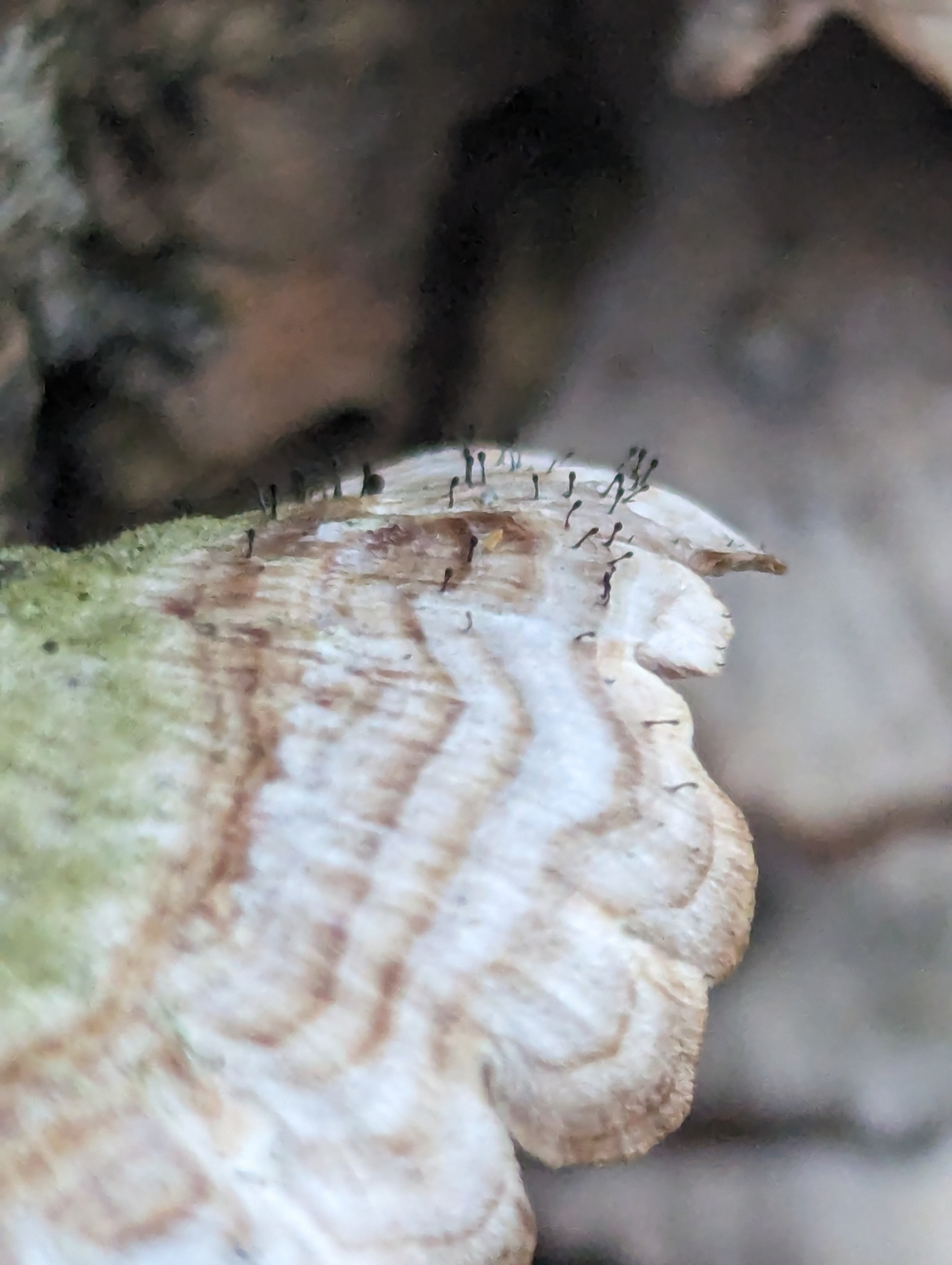
Phaeocalicium polyporaeum is a tiny mycoparasitic fungus, seen here on its most common host, Trichaptum cf biforme, although it has also been reported on Trametes versicolor.
8 Comments
WalrusByte@lemmy.world · 11 pts · 2y
It's a fungus-eat-fungus world out there
JoeKis@lemmy.world · 9 pts · 2y
Hey, I heard you like fungi, so I put fungi on your fungi 🍄²
Jojowski@sopuli.xyz · 5 pts · 2y
Or as the badger would say, mushroom mushroom!
NoIWontPickaName@kbin.social · 3 pts · 2y
Oh no! A snake!
Hegar@kbin.social · 6 pts · 2y
So cute!
How do they affect the host - are they particularly damaging, what exactly are they eating? I tried searching but couldn't find a lot of detail.
vinter@mander.xyz · 3 pts · 2y
Good question - I don't think they're damaging to the host, but it is hard to find good info
WelcomeBear@lemmy.world · 6 pts · 2y
Great, now I’m gonna be looking even more like a crazy person when walking in the woods, as I crawl around sticking my face up to every Turkey Tail (Trametes Versicolor) that I pass looking for these. Jk, thanks for sharing!
vinter@mander.xyz · 4 pts · 2y
You'll have more luck checking Trichaptum - I've never found them on Trametes yet. There's also a similar looking species, Gliocladium polyporicola, which grows on Stereum hirsutum, so may as well check all the small shelf fungi!