I'm actually kinda surprised that more don't have switches, but I suppose if you have radial rather than ring circuits you don't have to play 'hunt the appliance that tripped all your switches' quite so hard
Don't you get numpties plugging F appliances into C sockets then complaining to customer service that the induction stovetop doesn't boil water for tea fast enough?
The type-C shown in the picture is also not the only form it has and maybe partly misleading, the plug usually is significantly smaller and flat, and power strips can feature multiple of those in less space.
I see a lot of your comments about F being objectively same or better compared to G. The only thing I'd throw into the mix is the socket switch feels so logical, I'm really surprised it's not more standard.
High frequency use case: I don't need my microwave on all the time showing me the time, so I switch it off at the socket unless I'm using it
Low frequency use case: before going on holiday I switch all the electrics off at the sockets
Furthermore, appliances compatible with Type F are almost always compatible with Type E as well, it's just a matter of including both grounding mechanisms which they all do to avoid designing multiple cords.
I haven't yet visited the UK so the only time I've had trouble plugging in something in Europe is in shudders Italy.
This is very convenient, and not a problem in 99.9% of cases, but there are some devices where it's important to not have the hot and neutral wire swapped
As the least biased swiss person. Type J (or type N, Idk) is so much better. We put three plugs on the same surface as you have 1. I am always frustrated to see how impractical your plugs are when I go to the EU
And type-E. Most EU plugs are F-E compatible, because countries go about alternating them. Spain F, France E, Germany F, Poland E. You build a plug with a hole for the E ground bolt and a cutout for the F side contacts.
Hear me out, type L, the one in the middle, is the best socket, as it has all the things you talked about, but also accepts Italian plugs.
Type L bipasso (the one on the side) instead is the most space efficient, while retaining type C compatibility and grounding. Type L plugs also have plastic bits at the end to avoid contact with live wire (like UK one).
The actual electrical device can be designed such that it depends on exactly which direction is live and which is neutral.
Imagine a circuit loop that, as you follow along the circuit, has an AC power source, then a switch, and then the electrical appliance, leading back to the AC source it started from.
If you design the circuit so that you know for sure that the live wire goes to the switch first before the actual load, then your design ensures that if there is a fault or a short somewhere in the appliance, it won't let the live power leak anywhere (because the whole device is only connected to the neutral line, not the hot live voltage that alternates between positive and negative voltage). It's safer, and is less likely to damage the internals of a device. Especially if someone is going to reach inside and forgets to unplug it or cut power at the circuit breaker.
In practice tons of outlets are wired the wrong way around.
F actually has a convention for the socket, which is probably ignored even more often, but I would never trust live and neutral not to have been swapped somewhere regardless of outlet.
Just forcing plug designers to consider live/neutral being randomized in a very obvious manner might be safer in the long run than working on a partially broken system where someone manufacturer might be fooled into trusting it.
You have both live and neutral lines in the cable, coming up to a switch, which can either open the circuit on the live line or the neutral line. Then, the lamp itself has a single light bulb as the load.
If you place the switch on the live line, then the energy of the live line stops at the switch, with only whatever lower voltage is in the neutral line to actually be connected to the light bulb and lamp assembly.
But if you place the switch on the neutral line, you're leaving the entire lamp on the voltage of the live line, which gives the voltage more places to potentially short circuit. If you were to take a non-contact voltage detector, you'd be able to detect a live voltage in the line leading up to the bulb, even when it's not turned on.
You generally do this with the in-wall wiring and switches, too, and make the wall switches break open the circuit on the live line, not the neutral line. It's just a better practice overall.
And no, the neutral line is not totally grounded, so it can still pose a danger, too. But safety is exercised in layers, and putting the switch on the live line is the better practice.
This is an entirely theoretical problem that just doesn't exist in practice. Just to be clear, for it to short circuit, it's needs to find a path to ground. It can't just "go somewhere". Just because the line is longer didn't make it more dangerous for it to "just exist". There are regulations for wires, which include frankly absurd safety margins, regulations for the electrical devices that are not optional either (CE compliance for example). It just complicates this for basically no reason to have keyd outlets.
It's not electricity, exactly, but it is a higher voltage that is different from the average of everything around it. Electricity needs a closed loop to flow, and breaking open the loop with a switch means that no electricity flows, but the voltage of the live line goes up and down, creating an electric potential with anything that might be at a different voltage, if a conductor touches both.
it's a bad practice to design appliance in such a way to assume that neutral will have low voltage, because in case of neutral failure in three-phase circuit you can get full voltage there, and there can be a couple of volts difference (sometimes more) between neutral and ground even in normal circumstances
it's better to cut off both live and neutral at the same time anyway, especially if there's no standard which is which. also, as device designer you don't know if it'll be used on a circuit that has neutral and phase where you think it'll go or not. (ie british appliance used on unpolarized circuit, like type F. adapters exist)
it's a bad practice to design appliance in such a way to assume that neutral will have low voltage, because in case of neutral failure in three-phase circuit you can get full voltage there,
Who's using three phase in a setting where these types of plugs are used? In the US, at least, three phase circuits use very different receptacles and plugs.
The fact of the matter is that the switch has to be placed somewhere. And it's safer to place the switch between the load and the live wire, rather than between the load and the neutral wire. Designing a system where the live and neutral can easily be known makes it easier to do the safer thing.
you don't have to have three phase circuit to be affected by floating neutral in three-phase substation upstream. in some places in us there are 208v interphase three-phase circuits, which give 120v phase to neutral, which is distributed as a pair of wires as single-phase circuit. this is also normal way to deliver single-phase power in europe, as it's most efficient use of conductor. (from 400v three-phase circuits) in case more power is needed than single-phase circuit can deliver, three-phase circuit is installed
if there's switch on device, it's 2p1t meaning both phase and neutral are switched. if it's permanent, non-pluggable circuit, like lightning, it's okay if only phase is switched (neutral is connected permanently)
This is entirely an US problem created by the "center tap" nonsense. Nobody else I'm aware of uses that, let alone with that other. The outlet in question (type F) I'm only aware of being in use with one phase of a there phase supply plus the neutral, or just "the" phase and neutral. Note that in the second case, even if a house or apartment only has one phase wired to it, it's still generally part of a three phase supply, but the other phases just aren't wired to that particular place (incredibly rare these days, but might be the case for very old homes/installations).
Now the real reason for it being safe: The neutral is required to be wired to ground at the main breaker panel. With installations newer than 2000-something, every circuit has to be GFCI protected. With even newer installations having even more granular requirements (not sure on the specifics).
Yeah, you're probably right. I'm in over my head on this discussion.
I am reminded of my first day in an electrical engineering circuit theory class, when the professor made very, very clear that he was teaching us theory and fundamentals, and that the real world of electricity required a lot more safety built into the procedures and designs, because not everything behaves the way the undergrad textbook describes.
Some people say it does with certain devices but I've never had anything I've run into. The American outlets have been used as bi-directional in most instances. (With 2 prong). If they had a ground then you can only go in one way. But that said... Obviously a cord without a ground can still plug into an outlet that has the ground set up. If the device wants the current to go in a certain direction they use one with a slightly larger prong on one side, but if you pick up any phone charger in America, you can plug it into any outlet any direction.
Earth pin doesn't cause the plug to murder your feet like the UK plug.
Angled pins to prevent cross polarisation.
Localised power switch per socket so you can turn something on or off with your toe and not bend down to unplug it.
Looks like a ghost face and when in the double gang formation the switches when on looks like the plate is high.
And the thin pins means that with any weight (wall-wart, etc.), it starts to come out.
Doubly so if it's set into thin plasterboard that already wobbles.
Thin stamped construction is cheap, but can still be fitted with sleeving on the live (active and neutral) pins like UK & europlug, but not US plugs. This prevents objects or fingers getting to live pins on a partially inserted plug.
Industry has agreed that leads exit either straight out, or down-and-right, so there is no conflict for horizontal or vertical sockets. Sockets are universally installed earth-down.
Some images of the plugs, since I didn't know what they looked like.
It was mentioned the pins started being insulated like that second image 20 years ago, but going by the images I found the older uninsulated style is still more common. This is ofc a major shock hazard when plugging in your stuff.
Even with the insulation, you can still reach under the half inserted plug, just less easily and maybe only if you have smaller hands (like children).
Fundamentally flat sockets are doomed to be shock hazards, compare it to the recessed sockets where the entire surface the contacts insert into is cut off from reach before the pin insertion starts, and on top of that the pins of say type F have been insulated for so long many don't know there were uninsulated variants.
Another bonus of the recessed style is the plug doesn't stick as far out of your walls. For extension cords it's probably a bit bulkier, but when you sink the recession into the wallbox of the outlet you can get as flush as the width of the cable with an angled plug.
Also pretty sure you can step on angled type I plugs resting on their backs. The recessed plugs usually have grips on top so can't rest on their back even when angled. Their pins are also ball-shaped on the end, type I looks quite angular and more painful.
I live in Australia and I just did an audit of the power board that was sitting next to my bed. All four devices and the power board itself all have the insulated pins.
I can't remember the last time I saw one that didn't have insulated pins. I'm sure they exist, but they are not common.
We also have RCD on all our circuits so if someone is able to short the pins, it will trip within 20ms or less.
Oof, I see.
Kinda a bad look for type I when some of the users follow a different spec and ruin all attempts at improving safety or even keeping standards like earth being down.
In comparison the european plugs are moving closer together, for example F+E combo plugs are increasingly common.
Easy. Type G. For safety. If you're worried about night-time attacks from ninja you can leave a few plugs by your bedroom door and windows with the pins upward. They will rue the day they entered that room in the dark!
Type E and F plugs are not really a thing anymore, today it's more common to find combined Type E/F plugs.
Fuses in british plugs are a mistake and only a requirement because of sketchy practices allowed in british electrical code immediately after WW2. Nobody else does that because nowhere else electric code is built in such a way that it is necessary. Switch seems to be mildly useful tho
F plugs are the only type I've ever seen in all of Scandinavia, Germany, Spain and The Czech Republic. Never in my life have I seen an E plug or anything resembling a variation of E+F combined in any way. Only F. I don't understand how you can say they "are not really a thing anymore".
UK uses type G. Type E/F plug has both contact for grounding pin like in type E and two sliding ground contacts on side like in type F. Sockets are either E or F, and i've mostly seen E
I thing it is about the cord vs the plug. The plugs are as they are in the picture, but most cords are in F+E configuration. That is, there is the ground plates on the side of the cord (F) and there is a hole in the cord with a springplate to connect to the ground thingy in thr plug (E). I have two extension cords at home of the same brand, one in E and one in F configuration, but all my cords are compatible with both. I'm a bit unsure on this, but I may have seen a plug with E+F configuration in a country which usually goes E, but definetly never in a country with F config.
I think you mean plugs vs sockets. I was talking about sockets, but I mistakenly wrote plugs. I think I misunderstood the original comment in that regard.
Went to Poland for a few days and encountered the type e plugs and I immediately hated them because they interfere with chargers and they weren't reversible.
Fuses mean protection is localised. If the socket is good for 13A, but the cable is only safe to 5A, you can fuse at 3A or 5A, and know it's safe.
This is partially useful for extension leads. We don't have to worry about overloading a multiway extension. If we do, it will pop a 10p fuse, rather than cause a house fire.
Or you could just use thicker wires like everyone else, or drop the use of ring mains, which is the actual reason why fuses in plugs were introduced. The reason why this was done was post-WW2 copper shortage. In other countries you'll see more likely star type circuit
Are you really going to change the fuse in the receptacle when you plug a different cable in?
Low amp rated extension cords are dangerous unless they have a fuse in the cable. Best practice is to always use a cable that is rated higher than the circuit breakers.
I really think we should give japan more shit for this. Type A is terrible on it's own merits, they don't even polarize it. But then they have the gall to use two different frequencies with the divide in the middle of Honshu (the big island with the major cities). And unlike reasonable people they don't do a "50 hz gets this plug, but 60 gets a non compatible one". No, both use the plug that North America phased out over safety concerns.
But to answer the question, type B is nice and homey, but types I and N feel a fun mix of weird and foreign but close enough to be interesting. Most of the rest just feel like various "yeah it's a circle with two circular prongs all right"
That's only on homes that have updated wiring codes.
My grandma still has the old aluminum wiring with type A. It's annoying as shit because there are so many grounded plugs and only so many adapters that take the grounded plug.
Nope, the ground is a separate wire that just dangles there and never gets connected. Over the last 25 years I don't think I've ever seen a utilised ground wire.
In North America, neutral is connected to ground. It's the larger pin on a polarized plug. Some devices don't use it; these usually don't have a conductive outer surface.
It's the oldest standard on the list, and is still around older homes in the USA. They used to be equally-sized (aka unpolarized), but later on they had a bigger hole for neutral (polarized). They're not up to code anywhere anymore though, you'll only see them in older houses before the grounding pin was required.
In the USA, there's a ground in that the neutral wire is connected to ground. Devices that take advantage of this have a slightly broader neutral pin that won't fit into the hot pin.
I would argue that neither of the plugs shown in the picture nor those mentioned by others are the best.
Ignoring current adoption, I think that IEC 60906-1 is the best plug. It is very similar to the Swiss plug and was intended to, at least in the EU, replace other plugs. It has quite a few advantages over the other plugs. It is rated at 16 A, has a compact form factor, is polarised, and has almost all the common protections except fuses (which are pretty much useless anyway). Currently it only is used in South Africa without major changes to the plug.
Compared to the Schuko (Type F):
Much smaller. You can fit three plugs in the same space as a single Schuko plug (similar to Swiss triple outlets).
It takes less force to plug in. Above 2.5A, Schuko plugs require a lot of force to plug in and pull out. To some extent, this is actually good for safety, but I would argue that, in the case of Schuko plugs at least, it's too much
It is also easier to plug in without seeing the plug since it isn't round. Everyone who has tried to plug in a Schuko plug without seeing the holes knows how difficult it is
It's polarised/directional. In some very specific cases, there is a security advantage to using a polarised plug, but I think it's also a hassle to only be able to plug in a plug one direction.
It also fits Europlugs (the thin, small plugs with only two pins that are very common in Europe, e.g. on phone chargers)
Compared to (Typ G)):
Wayyy smaller
Not a stepping hazard
Rated for 16A (instead of 13 A)
No Fuse (Again, pretty unecessary)
Regarding three-phase power, I would argue that Swiss type 15 (10A) and type 25 (16A) plugs are the best. These are really cool because while beeing the same size as Schuko (Typ F) plugs, they can transfer three-phase power (so 11 kW; 230 V / 16A on all three phases). They also fit standard Swiss single-phase and Euro plugs. This makes plugging in large appliances like electric stoves much easier than in other countries.
I would find it quite cool if most countries switched to one common plug, and I think IEC 60906-1 would be best for that. It would also be possible to build hybrid sockets for many common plugs during the transition phase.
As someone who lived in the UK, the British one is far too chunky, especially in an age where most devices don’t use the mandatory earth pin (which is mechanically necessary to open the shutters in the socket). The one place it has an advantage over Europlug is in aeroplane seat sockets and such, where it stays in more firmly.
Having said that, the Swiss and Brazilian ones manage to get earthed connections into a slender footprint (the Swiss is compatible with unearthed Europlug, not sure about the Brazilian though it may be smaller). Apparently the Brazilian socket was proposed as an international standard by the IEC, though only Brazil adopted it.
The plugs are shuttered, so they're protected from being stabby-stabbed. The plug's prongs are sheathed so live metal is never exposed, negating the need for recessed sockets. Compared to recessed plugs, it takes less force to insert/remove them, but the oversized prongs and their triangular arrangement means it can safely withstand more lateral stress than any other plugs. Every plug has a fuse appropriate to the appliance so every device has appropriate protection while also allowing any device to be used on any outlet - no need for dedicated outlets for tumble dryers. And the plugs are traditionally right-angled, so once they're plugged in they only protrude about a centimeter, making it easy to plug things in behind furniture.
The whole 'every plug has a switch' thing is bullshit, though. That's just weird.
Type J is superior in every aspect.
-compact, you can fit 3 plugs into an outlet while Type F only fits one for example.
-robust.
-cannot reverse polarity.
-no fuse required as the law requires proper fuses in every electric installation with law enforced periodical checks.
-round pins that cannot puncture your skin if you step on them. It's hard to face the pins upwards anyway.
Type N might not be the best but it was like a gift from heavens here in Brazil. We had no standard before it so most outlets would take one or two unsafe options; most houses would not ground their outlets, people would yank out the ground pin from plugs to make them fit; washing machines would often come with a completely different plug that some houses would just have a different outlet for, while others would use adapters. And so many other issues.
Nowadays you don't even need to see what you're doing because you can just stick your hand into outlets to feel where it is and insert the plug blindly without any risk.
It became mandatory for all new products in 2011, so a few years after that most people were used to it, though there's many people still using adapters to this day.
In north America most dryers don't come with a cable because there's two different plugs that they use and the manufacturer just leaves it up to you to install the right one for your house
The plug is recessed, so half-plugged plugs have their pins inaccessible.
Most modern Type F plugs are Type E compatible, as well as Europlug compatible, which means that if the plug doesn't need to be bulky, it won't be.
Most modern installations have shutters in the pin holes, which both need to be pushed aside, making it impossible to plug in a foreign object. This unlike the Type G, where you only need to plug in the ground pin to reveal the live & neutral.
The plug is symmetrical, making it easier to plug in a device in a way that makes the cable work for the user. Besides, having live & neutral plugged into specific sides of a device is not that important for daily use by the average Joe, and if it is, you can just flip the plug.
The plug is inclined to land on its side, so if you drop one and then step on it, while it still won't be comfortable, it at least won't be as painful as stepping onto a Type G.
They're all functional, but the UK's Type G plug is the best of all plugs out there IMHO. I'm a Yankee and our plugs are fine, but the shutter design and built in fused plugs of the Type G are just.......chef's kiss.
The British plug has a lot of features that are supposed to make it very, very safe. It'd be interesting to see if there's a study out there that tries to make apples-to-apples comparisons of electrical accidents in different countries. Do those features actually work out in practice?
The US plug is bad, but does that actually translate into more accidents? Hard to say. If you can do the study above, then you can start making the argument for switching to something else.
ElectroBoom (Youtube) made some points about Australia's Type I. Seems it was very hard for him to electrocute himself. Lots of breakers on the outlets. I mean he did electrocute himself, but he was always going to.
Brazilian Type N looks like it's not a big deal, but the shape and depth are actually extremely good - you get a fantastic connection that never wobbles but also comes out when you need it without having weird pins or moving locks that always end up failing in some other designs. It's also compact and stacks nicely.
Fun fact; even though China and Australia both use Type I plugs - they aren’t actually fully cross-compatible, due to differences in the thickness of the metal prongs.
China’s are thinner, so they hang somewhat loose in Australian outlets - and given they are less likely to have insulation around the plug ends, are a relatively common fire risk.m
On the other hand - Australian plugs don’t commonly fit into Chinese wall sockets due to their girth (giggitty), and often require the use of a power board or travel adapter in order to work.
I really like the power outlets in the EU. You don't have to fart around with different sized prongs and the voltage is higher which makes things like tea kettles far more efficient.
Even tho I live where type F/C is common, I know that type G is the best. Reason is that ground pin always connects first and disconnects last. This is an ultimate way to make ground pin.
Also, type F/C and some other types sometimes doesn't have ground. There is literally not a single type G plug/socket without a ground. Simply safer.
The safest ones (design-wise) would be the ones that are inset, like types C, E, F, H, J, and K. If there is ever a chance a plug is partially pulled out or not fully inserted, the socket being inset wouldn't allow anything to touch any of the contacts.
Fuses in plugs and the orientation are relatively irrelevant to the plug style and are more a convention choice, if not regulatory requirement.
But personally. Type L is beautiful because is so modular. You just get different fruits for different needs. Need an etheret keystone. Get one an plop it in istead of a blanking plate. Need an extra switch? Same thing. All with the same faceplate for any possible combination.
The weird fucky version of type B they use in Thailand is missing. It's like the fucky version of the type L that's displayed except the fuckyness was added to a different base type.
It's type N, the one that was invented by the EU to standardize Europe into one outlet. It was literally designed to be the best. Unfortunately killed off by lazy bureaucrats but not before Brazil and South Africa adopted it anticipating Europe would join in.
As someone who travels a lot and has used all these sockets regularly, my vote is for Type G. The European ones seem like they would be the winner, but I've had trouble unplugging some devices. The recessed hole means some shitty cable designs don't have enough to grab on to to yank out. I can imagine some people with dexterity issues having a lot of problems.
I have a strong preference for the German and Swiss types, but I think we can all agree that Japan massively fucked up. They took the already shitty American plug and just forgot about the ground.
Huh, I never knew Australia shared the same power point as china, thought we were on our own. Good to know not EVERY country is suffering through inferior plugs
I have seen some debate amongst electricians about the orientation of this style of grounded outlet. There are pros and cons to argue for both orientations of this and other tri-pin style outlets.
your fourth point is demonstrably the best in this thread.
As a Brazilian, that makes me so sad. We used to have a type that could fit European and American plugs, but they just changed it. Never gonna let it go hahaha
As someone living in a country which uses a variant of Type B (without the ground pin), appreciate the design of Type F.
Mainly because it recessed, which helps with making the plug more securely plugged in. I think it has features that makes plugs really secure, and won't be yanked off, which happened to me quite a lot (tripping on a wire, yanking off something off the wall socket, etc).
Good point. I guess there's a balance to be made: secure enough plugging such that it won't easily be unplugged, and yet not so strong that the cable (or the plug) breaks instead.
I don’t know much about the others and this infographic doesn’t go into detail but Type G has a fused live, part-insulated live and neutral pins and the earth pin opens a shutter over the live and neutral in the socket itself.
Nice extra features and would be interesting to see if others have similar?
My favourite is this one, it makes things go brrrrrr.
Couldn't find a good photo of the socket online, only the plug. Cba to go take a photo of the socket right now, but I do have it at home and it's fully functional.
Edit: Searching in Estonian yielded results for the socket too. Someone was auctioning a set 7 years ago.
It seems like they're mostly comparable but the schuko might be a bit safer. As someone in the US the lack of polarity would be an issue for us. But I still think our plug designs are the absolute worst.
Nice find, IMO the Type F plugs are near perfect.
Type N might technically be better because it's smaller, but it's got poor adoption. Sadly the EU canceled their plans to adopt it.
Oh that's pretty cool. Closest thing I've seen to that in AU is a socket you have to twist from the ground port to access but it's definitely not standard.
I like the USA type-A plug. That's probably not a popular answer since I see lots of comments about safety features in the other plugs, but my focus is on convenience.
The plugs are small, making it much easier to design folding-plug devices like this one. It also means that cords don't have a bulky knob on the end, and splitters and power strips can be smaller than other plugs - much smaller than Schuko type-C or UK type-G.
The most common objection is that it's possible for live pins to be exposed when a device is partially plugged in. That's true, and most people who grew up around them has been shocked that way once. Few have been shocked twice, as the lesson to be careful with electricity usually forms a lasting memory.
The US uses 120V getting shocked by that once or twice can't be fun.
But, the vast majority of the world uses 230V getting shocked by that would be a lot less fun.
I've been shocked with both. I can confirm 230V hurts more. Neither is likely to result in a medically significant injury with this kind of shock though - just momentary discomfort.
Growing up in the U.S. Ive never been able to shock myself plugging in a type A or B connection. 35 years in and never met someone in person who had ever complained about doing so. Now dryer plugs annoy me. They are the 220/240v, and I know there are at least 3 different types. So I've had to swap the power cords on the dryer in every place I've lived in. (I just keep the old ones). But if you rent a place built in 1970, 1985, and 2010 (random dates). They will all likely have different outlets.
I think that type A plug would be greatly improved in terms of safety and mechanically if it was put in a grounded metal shroud, in style of DIN connector https://en.wikipedia.org/wiki/DIN_connector it still would be compact, smaller than type F
Type B is objectively inferior. This is not anti-americanism either, Technology Connections has my back here. But it's not bad enough to replace three big countries worth of plugs and outlets. The only way to have a global standard would be something like Italy's plug orgy system where you can fit multiple different types but that would kinda defy the purpose.
I don't think that's a real argument. There are plenty of things that suck and the reason they don't change is because of inertia, not because it works well. See Qwerty, Azerty, Qwertz.
So you say technology connections has your back but you didn't even say why it's inferior my first thought is you have no idea why. It just seems dumb posting that without any sorta proof.
it's been standardized multiple times! the Italian outlets look like that to be backwards compatible with their older standard, where different amperages had different plugs.
I couldn't plug in an adaptor in what seemed to be the correct way, in a Sri Lankan hotel (type M), but it went in ok when I rotated it. As soon as it went in, the power went out in the entire hotel. It was out for the rest of the night, and as I went up the street the next morning, there was a crew working on a transformer a few blocks away. Coincidence?
Also, at the place I was working, there were 2 other types of power plug than type M. WTF?
safety-wise, type F is used with 240v. less likely to touch prongs. they are different to keep from plugging in incompatible devices from other systems.
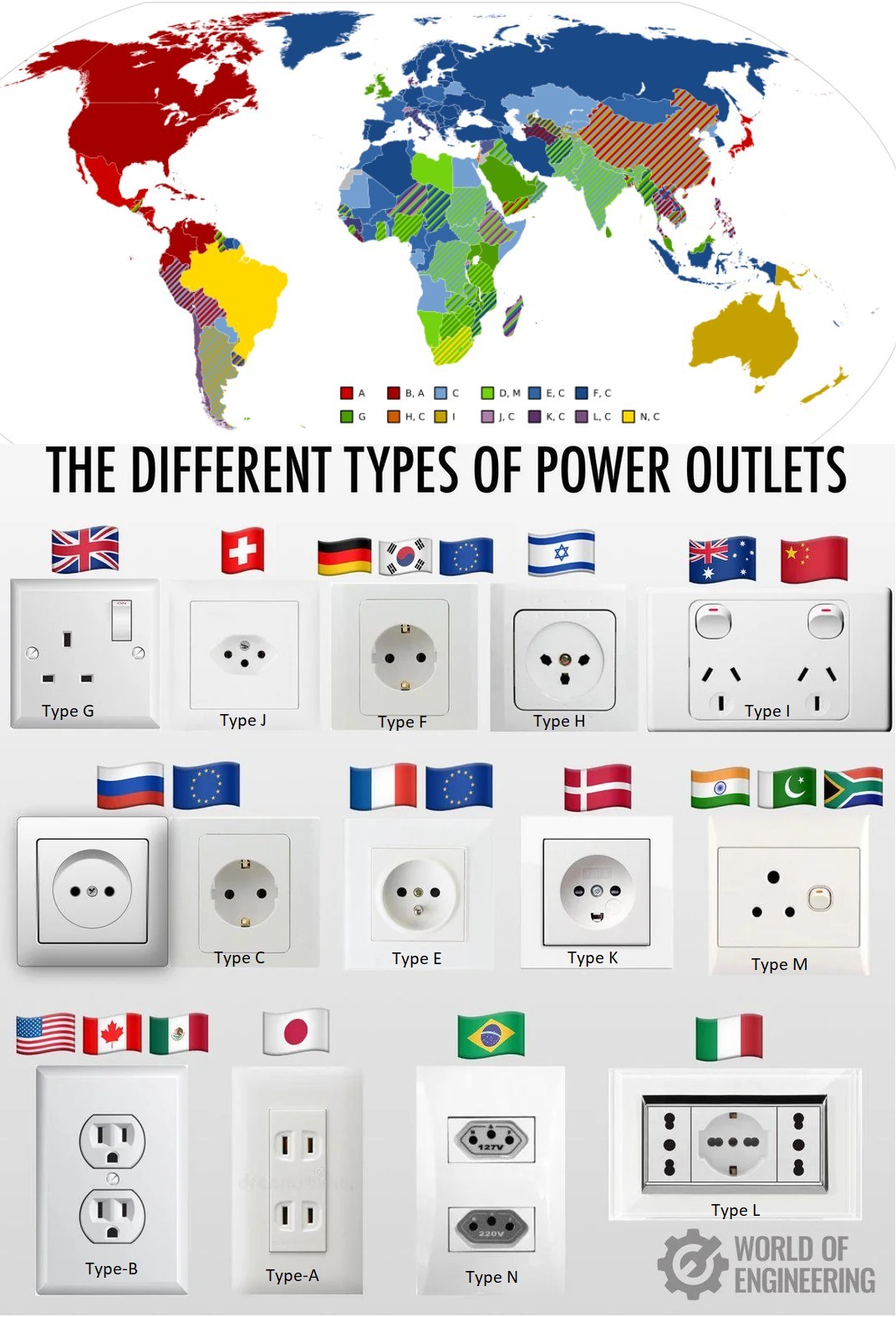
476 Comments
7uWqKj@lemmy.world · 519 pts · 1y
The British one. It has a switch and a fuse, and later versions have age-verification so your kids can no longer plug in your adult toys.
IcyToes@sh.itjust.works · 135 pts · 1y
Had me in the first half. Well played.
Diplomjodler3@lemmy.world · 61 pts · 1y
And your adult toys must be licensed, of course. To protect the kids.
HubertManne@piefed.social · 7 pts · 1y
Its important you don't allow them access so you need to keep them on your person in a place thats very hard to access. So hard.
SLVRDRGN@lemmy.world · 2 pts · 1y
Your last sentence is a double entendre?
HubertManne@piefed.social · 7 pts · 1y
double in your entendre.
Zier@fedia.io · 10 pts · 1y
My toys are wireless...
blackn1ght@feddit.uk · 37 pts · 1y
You'll need a broadcasting licence for that, mate.
amorpheus@lemmy.world · 4 pts · 1y
Only if they're charged.
P.S.: since battery cells need to be disposed properly, they are now an 18+ purchase.
twikz@sopuli.xyz · 1 pts · 1y
Age verification on batteries?
7uWqKj@lemmy.world · 1 pts · 1y
These are the best anyway
captainlezbian@lemmy.world · 6 pts · 1y
Nah, they're too power limited. What you really want will require a 3 phase hookup to the bedroom.
ivanafterall@lemmy.world · 3 pts · 1y
Just be careful, three phase hookups = potential hurt feelings and messy drama.
ThePyroPython@lemmy.world · 5 pts · 1y
Hey now, let's not give BSI and NESO any ideas mate.
silasmariner@programming.dev · 4 pts · 1y
I'm actually kinda surprised that more don't have switches, but I suppose if you have radial rather than ring circuits you don't have to play 'hunt the appliance that tripped all your switches' quite so hard
CleoCommunist@lemmy.ml · 1 pts · 1y
Real
Ek-Hou-Van-Braai@piefed.social · 160 pts · 1y
In my opinion it's Type-F
Because:
Localhorst86@feddit.org · 67 pts · 1y
It took me a few seconds to realize you werent talking about shoving a USB Type C plug into there.
kopasz7@sh.itjust.works · 38 pts · 1y
What's the difference of C and F type?
Ek-Hou-Van-Braai@piefed.social · 51 pts · 1y
C is mostly for low power devices
F is basically a heavy duty upgrade of C, it's got grounding on the side and can handle 16A (ovens, heaters etc.)
Thedogdrinkscoffee@lemmy.ca · 14 pts · 1y
Don't you get numpties plugging F appliances into C sockets then complaining to customer service that the induction stovetop doesn't boil water for tea fast enough?
fullsquare@awful.systems · 21 pts · 1y
no, because it'll just trip fuse, and stoves are wired directly anyway
AI_toothbrush@lemmy.zip · 5 pts · 1y
You cant the plug is thicker
bdonvr@thelemmy.club · 3 pts · 1y
Can you plug C into F?
AI_toothbrush@lemmy.zip · 8 pts · 1y
Yeah. You cant plug f into c because f is thicker by a bit but c goes into f.
Strider@lemmy.world · 4 pts · 1y
The type-C shown in the picture is also not the only form it has and maybe partly misleading, the plug usually is significantly smaller and flat, and power strips can feature multiple of those in less space.
Nico_198X@europe.pub · 9 pts · 1y
Agreed. The best.
TIN@feddit.uk · 8 pts · 1y
I see a lot of your comments about F being objectively same or better compared to G. The only thing I'd throw into the mix is the socket switch feels so logical, I'm really surprised it's not more standard.
High frequency use case: I don't need my microwave on all the time showing me the time, so I switch it off at the socket unless I'm using it
Low frequency use case: before going on holiday I switch all the electrics off at the sockets
Mac@mander.xyz · 6 pts · 1y
I never understood why every appliance in the kitchen needs to display the time. lol
RaivoKulli@sopuli.xyz · 3 pts · 1y
Socket switch isn't really a feature of the socket itself. I've had schuko sockets with switches. It's just not as common
Tja@programming.dev · 3 pts · 1y
Why not switch off the fuse in the holiday case? More time efficient.
azertyfun@sh.itjust.works · 5 pts · 1y
Furthermore, appliances compatible with Type F are almost always compatible with Type E as well, it's just a matter of including both grounding mechanisms which they all do to avoid designing multiple cords.
I haven't yet visited the UK so the only time I've had trouble plugging in something in Europe is in shudders Italy.
Anivia@feddit.org · 4 pts · 1y
This is very convenient, and not a problem in 99.9% of cases, but there are some devices where it's important to not have the hot and neutral wire swapped
RaivoKulli@sopuli.xyz · 2 pts · 1y
What sort of devices
Anivia@feddit.org · 2 pts · 1y
Solar Microinverters
jumping_redditor@sh.itjust.works · 0 pts · 1y
why should those plug into a normal outlet regularly? wouldn't that be a measure polarity and just leave it alone device?
richardwonka@lemmy.world · 3 pts · 1y
Bi-directional is a double-edged feature.
It means that there is no reliable way of identifying line and neutral wire, which requires more complex double switches downstream.
Also, F is unnecessarily clunky and big and hard to make a weather-proof version of because of the complex shape.
LegoBrickOnFire@lemmy.world · 2 pts · 1y
As the least biased swiss person. Type J (or type N, Idk) is so much better. We put three plugs on the same surface as you have 1. I am always frustrated to see how impractical your plugs are when I go to the EU
Tja@programming.dev · 2 pts · 1y
And type-E. Most EU plugs are F-E compatible, because countries go about alternating them. Spain F, France E, Germany F, Poland E. You build a plug with a hole for the E ground bolt and a cutout for the F side contacts.
Rinox@feddit.it · 2 pts · 1y
Hear me out, type L, the one in the middle, is the best socket, as it has all the things you talked about, but also accepts Italian plugs.
Type L bipasso (the one on the side) instead is the most space efficient, while retaining type C compatibility and grounding. Type L plugs also have plastic bits at the end to avoid contact with live wire (like UK one).
rustydrd@sh.itjust.works · 1 pts · 1y
Jawoll!
ms_lane@lemmy.world · -12 pts · 1y
That's bad.
umfk@lemmy.world · 23 pts · 1y
Every device produced in the past few decades doesn't care which wire is live.
paraphrand@lemmy.world · 14 pts · 1y
Trainguyrom@reddthat.com · 3 pts · 1y
Damn homophobes...
Tja@programming.dev · 2 pts · 1y
Clear, informative and solution oriented. I wish all signs were this good.
hemko@lemmy.dbzer0.com · 13 pts · 1y
Why? It doesn't make any difference with AC
exasperation@lemmy.dbzer0.com · 7 pts · 1y
The actual electrical device can be designed such that it depends on exactly which direction is live and which is neutral.
Imagine a circuit loop that, as you follow along the circuit, has an AC power source, then a switch, and then the electrical appliance, leading back to the AC source it started from.
If you design the circuit so that you know for sure that the live wire goes to the switch first before the actual load, then your design ensures that if there is a fault or a short somewhere in the appliance, it won't let the live power leak anywhere (because the whole device is only connected to the neutral line, not the hot live voltage that alternates between positive and negative voltage). It's safer, and is less likely to damage the internals of a device. Especially if someone is going to reach inside and forgets to unplug it or cut power at the circuit breaker.
Redjard@lemmy.dbzer0.com · 12 pts · 1y
In practice tons of outlets are wired the wrong way around.
F actually has a convention for the socket, which is probably ignored even more often, but I would never trust live and neutral not to have been swapped somewhere regardless of outlet.
Just forcing plug designers to consider live/neutral being randomized in a very obvious manner might be safer in the long run than working on a partially broken system where someone manufacturer might be fooled into trusting it.
guy@piefed.social · 2 pts · 1y
Could you give an example of such a device? Seems like a bad design
exasperation@lemmy.dbzer0.com · 2 pts · 1y
A simple lamp can demonstrate.
You have both live and neutral lines in the cable, coming up to a switch, which can either open the circuit on the live line or the neutral line. Then, the lamp itself has a single light bulb as the load.
If you place the switch on the live line, then the energy of the live line stops at the switch, with only whatever lower voltage is in the neutral line to actually be connected to the light bulb and lamp assembly.
But if you place the switch on the neutral line, you're leaving the entire lamp on the voltage of the live line, which gives the voltage more places to potentially short circuit. If you were to take a non-contact voltage detector, you'd be able to detect a live voltage in the line leading up to the bulb, even when it's not turned on.
You generally do this with the in-wall wiring and switches, too, and make the wall switches break open the circuit on the live line, not the neutral line. It's just a better practice overall.
And no, the neutral line is not totally grounded, so it can still pose a danger, too. But safety is exercised in layers, and putting the switch on the live line is the better practice.
Ek-Hou-Van-Braai@piefed.social · 6 pts · 1y
That's a lamp in theory, but do you know of any actual lamps being sold where this matters?
jumping_redditor@sh.itjust.works · 0 pts · 1y
in the US it's fairly common, so probably some American manufacturers would do it that way
Creat@discuss.tchncs.de · 2 pts · 1y
This is an entirely theoretical problem that just doesn't exist in practice. Just to be clear, for it to short circuit, it's needs to find a path to ground. It can't just "go somewhere". Just because the line is longer didn't make it more dangerous for it to "just exist". There are regulations for wires, which include frankly absurd safety margins, regulations for the electrical devices that are not optional either (CE compliance for example). It just complicates this for basically no reason to have keyd outlets.
guy@piefed.social · 1 pts · 1y
If there's electricity reaching the bulb it would be lit no? So if I place the contact upside down, I wouldn't be able to turn off my light?
exasperation@lemmy.dbzer0.com · 2 pts · 1y
It's not electricity, exactly, but it is a higher voltage that is different from the average of everything around it. Electricity needs a closed loop to flow, and breaking open the loop with a switch means that no electricity flows, but the voltage of the live line goes up and down, creating an electric potential with anything that might be at a different voltage, if a conductor touches both.
fullsquare@awful.systems · 0 pts · 1y
it's a bad practice to design appliance in such a way to assume that neutral will have low voltage, because in case of neutral failure in three-phase circuit you can get full voltage there, and there can be a couple of volts difference (sometimes more) between neutral and ground even in normal circumstances
it's better to cut off both live and neutral at the same time anyway, especially if there's no standard which is which. also, as device designer you don't know if it'll be used on a circuit that has neutral and phase where you think it'll go or not. (ie british appliance used on unpolarized circuit, like type F. adapters exist)
exasperation@lemmy.dbzer0.com · 6 pts · 1y
Who's using three phase in a setting where these types of plugs are used? In the US, at least, three phase circuits use very different receptacles and plugs.
The fact of the matter is that the switch has to be placed somewhere. And it's safer to place the switch between the load and the live wire, rather than between the load and the neutral wire. Designing a system where the live and neutral can easily be known makes it easier to do the safer thing.
fullsquare@awful.systems · 2 pts · 1y
you don't have to have three phase circuit to be affected by floating neutral in three-phase substation upstream. in some places in us there are 208v interphase three-phase circuits, which give 120v phase to neutral, which is distributed as a pair of wires as single-phase circuit. this is also normal way to deliver single-phase power in europe, as it's most efficient use of conductor. (from 400v three-phase circuits) in case more power is needed than single-phase circuit can deliver, three-phase circuit is installed
if there's switch on device, it's 2p1t meaning both phase and neutral are switched. if it's permanent, non-pluggable circuit, like lightning, it's okay if only phase is switched (neutral is connected permanently)
Creat@discuss.tchncs.de · 2 pts · 1y
This is entirely an US problem created by the "center tap" nonsense. Nobody else I'm aware of uses that, let alone with that other. The outlet in question (type F) I'm only aware of being in use with one phase of a there phase supply plus the neutral, or just "the" phase and neutral. Note that in the second case, even if a house or apartment only has one phase wired to it, it's still generally part of a three phase supply, but the other phases just aren't wired to that particular place (incredibly rare these days, but might be the case for very old homes/installations).
Now the real reason for it being safe: The neutral is required to be wired to ground at the main breaker panel. With installations newer than 2000-something, every circuit has to be GFCI protected. With even newer installations having even more granular requirements (not sure on the specifics).
exasperation@lemmy.dbzer0.com · 1 pts · 1y
Yeah, you're probably right. I'm in over my head on this discussion.
I am reminded of my first day in an electrical engineering circuit theory class, when the professor made very, very clear that he was teaching us theory and fundamentals, and that the real world of electricity required a lot more safety built into the procedures and designs, because not everything behaves the way the undergrad textbook describes.
So I've learned something new. Thanks.
LifeInMultipleChoice@lemmy.world · 3 pts · 1y
Some people say it does with certain devices but I've never had anything I've run into. The American outlets have been used as bi-directional in most instances. (With 2 prong). If they had a ground then you can only go in one way. But that said... Obviously a cord without a ground can still plug into an outlet that has the ground set up. If the device wants the current to go in a certain direction they use one with a slightly larger prong on one side, but if you pick up any phone charger in America, you can plug it into any outlet any direction.
lagoon8622@sh.itjust.works · 4 pts · 1y
That's not how AC works
That's not Ground, it's Neutral. Neutral is sometimes bonded to Ground, but they are fundamentally different things
LifeInMultipleChoice@lemmy.world · 1 pts · 1y
MotoAsh@lemmy.world · 3 pts · 1y
JcbAzPx@lemmy.world · 1 pts · 1y
In the particular case the sign is trying to prevent it's to keep lazy idiots from electrocuting themselves stringing up Christmas lights.
MotoAsh@lemmy.world · 1 pts · 1y
HeerlijkeDrop@thebrainbin.org · 6 pts · 1y
Why?
victorz@lemmy.world · 2 pts · 1y
Why?
guy@piefed.social · 1 pts · 1y
No it's bi-winning
breecher@sh.itjust.works · 109 pts · 1y
Type K. I mean how can you say no to that face?
Localhorst86@feddit.org · 22 pts · 1y
why would you shove things into it's mouth?
BunScientist@lemmy.zip · 19 pts · 1y
I think shoving things into its eyes is more concerning
Tja@programming.dev · 1 pts · 1y
This is universally true.
VonReposti@feddit.dk · 14 pts · 1y
Because it likes it.
Mouselemming@sh.itjust.works · 6 pts · 1y
It's the only one that looks happy to be there.
petersr@lemmy.world · 5 pts · 1y
:D
slazer2au@lemmy.world · 65 pts · 1y
Type I
Earth pin doesn't cause the plug to murder your feet like the UK plug.
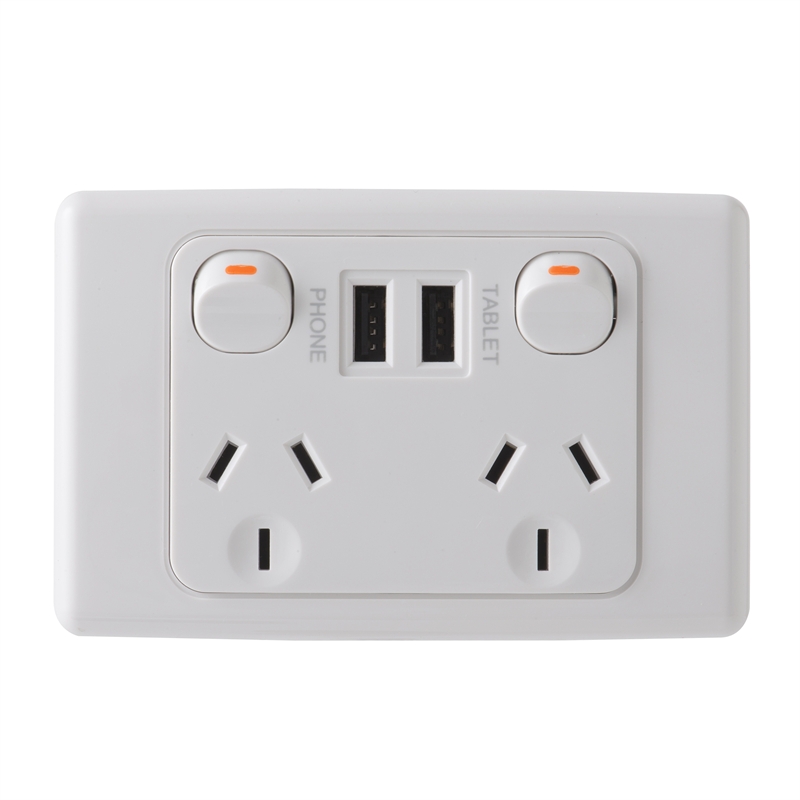
Angled pins to prevent cross polarisation.
Localised power switch per socket so you can turn something on or off with your toe and not bend down to unplug it.
Looks like a ghost face and when in the double gang formation the switches when on looks like the plate is high.
Stovetop@lemmy.world · 33 pts · 1y
GreatAlbatross@feddit.uk · 20 pts · 1y
And the thin pins means that with any weight (wall-wart, etc.), it starts to come out.
Doubly so if it's set into thin plasterboard that already wobbles.
ms_lane@lemmy.world · 19 pts · 1y
Pins are insulated since 2003.
SomeoneSomewhere@lemmy.nz · 9 pts · 1y
Also:
Thin stamped construction is cheap, but can still be fitted with sleeving on the live (active and neutral) pins like UK & europlug, but not US plugs. This prevents objects or fingers getting to live pins on a partially inserted plug.
Industry has agreed that leads exit either straight out, or down-and-right, so there is no conflict for horizontal or vertical sockets. Sockets are universally installed earth-down.
Reasonably compact.
muntedcrocodile@hilariouschaos.com · 6 pts · 1y
Yep us Aussies have the objectively best plug.
makingStuffForFun@lemmy.ml · 6 pts · 1y
New world solutions. I agree.
Redjard@lemmy.dbzer0.com · 3 pts · 1y
Some images of the plugs, since I didn't know what they looked like.
It was mentioned the pins started being insulated like that second image 20 years ago, but going by the images I found the older uninsulated style is still more common. This is ofc a major shock hazard when plugging in your stuff.
Even with the insulation, you can still reach under the half inserted plug, just less easily and maybe only if you have smaller hands (like children).
Fundamentally flat sockets are doomed to be shock hazards, compare it to the recessed sockets where the entire surface the contacts insert into is cut off from reach before the pin insertion starts, and on top of that the pins of say type F have been insulated for so long many don't know there were uninsulated variants.
Another bonus of the recessed style is the plug doesn't stick as far out of your walls. For extension cords it's probably a bit bulkier, but when you sink the recession into the wallbox of the outlet you can get as flush as the width of the cable with an angled plug.
Also pretty sure you can step on angled type I plugs resting on their backs. The recessed plugs usually have grips on top so can't rest on their back even when angled. Their pins are also ball-shaped on the end, type I looks quite angular and more painful.
unknown@sh.itjust.works · 6 pts · 1y
I live in Australia and I just did an audit of the power board that was sitting next to my bed. All four devices and the power board itself all have the insulated pins. I can't remember the last time I saw one that didn't have insulated pins. I'm sure they exist, but they are not common.
We also have RCD on all our circuits so if someone is able to short the pins, it will trip within 20ms or less.
ms_lane@lemmy.world · 2 pts · 1y
Ironically, those are upside down.
Which usually indicates Chinese Type I - they don't insulate pins but do put earth on top.
We insulate pins but live/neutral is on top.
Redjard@lemmy.dbzer0.com · 1 pts · 1y
Oof, I see.
Kinda a bad look for type I when some of the users follow a different spec and ruin all attempts at improving safety or even keeping standards like earth being down.
In comparison the european plugs are moving closer together, for example F+E combo plugs are increasingly common.
alansuspect@aussie.zone · 1 pts · 1y
I'm a G guy at heart but use I now. My main issue is how easily the pins can bend.
pastermil@sh.itjust.works · 53 pts · 1y
Type F.
SCHUKO PLUG SUPREMACY FOREVER!
pruwybn@discuss.tchncs.de · 52 pts · 1y
Oh, a list of things each identified by a different letter, better put them in a completely random order.
Hossenfeffer@feddit.uk · 51 pts · 1y
Easy. Type G. For safety. If you're worried about night-time attacks from ninja you can leave a few plugs by your bedroom door and windows with the pins upward. They will rue the day they entered that room in the dark!
fullsquare@awful.systems · 39 pts · 1y
Type E and F plugs are not really a thing anymore, today it's more common to find combined Type E/F plugs.
Fuses in british plugs are a mistake and only a requirement because of sketchy practices allowed in british electrical code immediately after WW2. Nobody else does that because nowhere else electric code is built in such a way that it is necessary. Switch seems to be mildly useful tho
victorz@lemmy.world · 14 pts · 1y
F plugs are the only type I've ever seen in all of Scandinavia, Germany, Spain and The Czech Republic. Never in my life have I seen an E plug or anything resembling a variation of E+F combined in any way. Only F. I don't understand how you can say they "are not really a thing anymore".
You mean not a thing in the UK?
fullsquare@awful.systems · 5 pts · 1y
UK uses type G. Type E/F plug has both contact for grounding pin like in type E and two sliding ground contacts on side like in type F. Sockets are either E or F, and i've mostly seen E
victorz@lemmy.world · 7 pts · 1y
Oh you mean the plugs, as opposed to the sockets? Then I misunderstood. 😄
lime@feddit.nu · 2 pts · 1y
E is only common in five countries, F is more widely used.
state_electrician@discuss.tchncs.de · 2 pts · 1y
I've seen E in France.
victorz@lemmy.world · 0 pts · 1y
Not really the point, what I'm saying is that F sockets are definitely still "a thing".
state_electrician@discuss.tchncs.de · 1 pts · 1y
Oh, yeah, absolutely. The best thing. I just wanted to say that E type plugs are also in use.
victorz@lemmy.world · 1 pts · 1y
The best thing 😆 Yeah they are pretty great. Admittedly I am biased 😅
mumblerfish@lemmy.world · 1 pts · 1y
I thing it is about the cord vs the plug. The plugs are as they are in the picture, but most cords are in F+E configuration. That is, there is the ground plates on the side of the cord (F) and there is a hole in the cord with a springplate to connect to the ground thingy in thr plug (E). I have two extension cords at home of the same brand, one in E and one in F configuration, but all my cords are compatible with both. I'm a bit unsure on this, but I may have seen a plug with E+F configuration in a country which usually goes E, but definetly never in a country with F config.
victorz@lemmy.world · 2 pts · 1y
I think you mean plugs vs sockets. I was talking about sockets, but I mistakenly wrote plugs. I think I misunderstood the original comment in that regard.
cepelinas@sopuli.xyz · 1 pts · 1y
Went to Poland for a few days and encountered the type e plugs and I immediately hated them because they interfere with chargers and they weren't reversible.
cynar@lemmy.world · 6 pts · 1y
Fuses mean protection is localised. If the socket is good for 13A, but the cable is only safe to 5A, you can fuse at 3A or 5A, and know it's safe.
This is partially useful for extension leads. We don't have to worry about overloading a multiway extension. If we do, it will pop a 10p fuse, rather than cause a house fire.
fullsquare@awful.systems · 11 pts · 1y
Or you could just use thicker wires like everyone else, or drop the use of ring mains, which is the actual reason why fuses in plugs were introduced. The reason why this was done was post-WW2 copper shortage. In other countries you'll see more likely star type circuit
hobovision@mander.xyz · 2 pts · 1y
Are you really going to change the fuse in the receptacle when you plug a different cable in?
Low amp rated extension cords are dangerous unless they have a fuse in the cable. Best practice is to always use a cable that is rated higher than the circuit breakers.
cynar@lemmy.world · 2 pts · 1y
The fuse is in the plug itself. It goes with the cable. That's the point of it! 🤣 It lets you down rate your cables from the breaker rating.
dcat@lemmy.world · 1 pts · 1y
this is totally wrong. type F (“schuko”) is the main standard in europe.
captainlezbian@lemmy.world · 35 pts · 1y
I really think we should give japan more shit for this. Type A is terrible on it's own merits, they don't even polarize it. But then they have the gall to use two different frequencies with the divide in the middle of Honshu (the big island with the major cities). And unlike reasonable people they don't do a "50 hz gets this plug, but 60 gets a non compatible one". No, both use the plug that North America phased out over safety concerns.
But to answer the question, type B is nice and homey, but types I and N feel a fun mix of weird and foreign but close enough to be interesting. Most of the rest just feel like various "yeah it's a circle with two circular prongs all right"
CetaceanNeeded@lemmy.world · 35 pts · 1y
It's obviously the one in the country I live in. All the others that I have had zero experience with are from Satan.
thespcicifcocean@lemmy.world · 33 pts · 1y
does type A just have no ground?
xep@fedia.io · 17 pts · 1y
Yup. Japan also has grounded outlets, though, although they are comparatively rarer.
karasu_sue@pf.korako.me · 11 pts · 1y
I recently had a house built, and most of the outlets do support grounding.
However, it's not very common to actually use them — many appliances don’t have grounded plugs, or the shapes don’t match.
I’d say only things like washing machines, microwaves, and rice cookers tend to use them.
thespcicifcocean@lemmy.world · 3 pts · 1y
are house fires and electrocutions common occurrences?
MotoAsh@lemmy.world · 13 pts · 1y
xep@fedia.io · 2 pts · 1y
Not as far as I'm aware.
VivianRixia@piefed.social · 2 pts · 1y
I see the left side of just slightly bigger than the right, so I expect one of those sides to be the ground
xep@fedia.io · 14 pts · 1y
You'd think so, but the ground will either be at the bottom of the outlet, requiring a separate cable, or Type-B.
peoplebeproblems@midwest.social · 8 pts · 1y
That's only on homes that have updated wiring codes.
My grandma still has the old aluminum wiring with type A. It's annoying as shit because there are so many grounded plugs and only so many adapters that take the grounded plug.
And then don't ground it. Fuck safety right
xep@fedia.io · 1 pts · 1y
There is the GFCI in the switch box, but yeah, both gfci+grounded would be preferable.
vaionko@sopuli.xyz · 2 pts · 1y
A GFCI won't do squat without PE connected
AI_toothbrush@lemmy.zip · 2 pts · 1y
Where? That is the most scuffed ground ive ever seen
bobzer@lemmy.zip · 5 pts · 1y
Nope, just live and neutral.
SuperApples@lemmy.world · 4 pts · 1y
Nope, the ground is a separate wire that just dangles there and never gets connected. Over the last 25 years I don't think I've ever seen a utilised ground wire.
Zak@lemmy.world · 2 pts · 1y
In North America, neutral is connected to ground. It's the larger pin on a polarized plug. Some devices don't use it; these usually don't have a conductive outer surface.
ZoteTheMighty@lemmy.zip · 1 pts · 1y
It's the oldest standard on the list, and is still around older homes in the USA. They used to be equally-sized (aka unpolarized), but later on they had a bigger hole for neutral (polarized). They're not up to code anywhere anymore though, you'll only see them in older houses before the grounding pin was required.
Zak@lemmy.world · 1 pts · 1y
In the USA, there's a ground in that the neutral wire is connected to ground. Devices that take advantage of this have a slightly broader neutral pin that won't fit into the hot pin.
I_NEED_A_NAME@feddit.org · 31 pts · 1y
I would argue that neither of the plugs shown in the picture nor those mentioned by others are the best.
Ignoring current adoption, I think that IEC 60906-1 is the best plug. It is very similar to the Swiss plug and was intended to, at least in the EU, replace other plugs. It has quite a few advantages over the other plugs. It is rated at 16 A, has a compact form factor, is polarised, and has almost all the common protections except fuses (which are pretty much useless anyway). Currently it only is used in South Africa without major changes to the plug.
Compared to the Schuko (Type F):
Compared to (Typ G)):
Regarding three-phase power, I would argue that Swiss type 15 (10A) and type 25 (16A) plugs are the best. These are really cool because while beeing the same size as Schuko (Typ F) plugs, they can transfer three-phase power (so 11 kW; 230 V / 16A on all three phases). They also fit standard Swiss single-phase and Euro plugs. This makes plugging in large appliances like electric stoves much easier than in other countries.
I would find it quite cool if most countries switched to one common plug, and I think IEC 60906-1 would be best for that. It would also be possible to build hybrid sockets for many common plugs during the transition phase.
AllNewTypeFace@leminal.space · 29 pts · 1y
As someone who lived in the UK, the British one is far too chunky, especially in an age where most devices don’t use the mandatory earth pin (which is mechanically necessary to open the shutters in the socket). The one place it has an advantage over Europlug is in aeroplane seat sockets and such, where it stays in more firmly.
Having said that, the Swiss and Brazilian ones manage to get earthed connections into a slender footprint (the Swiss is compatible with unearthed Europlug, not sure about the Brazilian though it may be smaller). Apparently the Brazilian socket was proposed as an international standard by the IEC, though only Brazil adopted it.
cynar@lemmy.world · 26 pts · 1y
For safety, the BS1363 (UK, type G) is by far the best.
It's fused. (Seriously why the hell aren't all plugs fused!)
Live and neutral can't be reversed.
Holes are gated (so no kids sticking spoons in).
High capacity, 240V at 13A gives 3kW of power.
It's only real downside is its size.
rmuk@feddit.uk · 25 pts · 1y
G.
The plugs are shuttered, so they're protected from being stabby-stabbed. The plug's prongs are sheathed so live metal is never exposed, negating the need for recessed sockets. Compared to recessed plugs, it takes less force to insert/remove them, but the oversized prongs and their triangular arrangement means it can safely withstand more lateral stress than any other plugs. Every plug has a fuse appropriate to the appliance so every device has appropriate protection while also allowing any device to be used on any outlet - no need for dedicated outlets for tumble dryers. And the plugs are traditionally right-angled, so once they're plugged in they only protrude about a centimeter, making it easy to plug things in behind furniture.
The whole 'every plug has a switch' thing is bullshit, though. That's just weird.
son_named_bort@lemmy.world · 24 pts · 1y
The type I grew up with.
Kissaki@feddit.org · 23 pts · 1y
Europlug Compatibility
ChiefPulaski@startrek.website · 22 pts · 1y
Type J is superior in every aspect. -compact, you can fit 3 plugs into an outlet while Type F only fits one for example. -robust. -cannot reverse polarity. -no fuse required as the law requires proper fuses in every electric installation with law enforced periodical checks. -round pins that cannot puncture your skin if you step on them. It's hard to face the pins upwards anyway.
twice_hatch@midwest.social · 20 pts · 1y
I defer to Technology Connections
tgirlschierke@lemmy.blahaj.zone · 20 pts · 1y
fuck's happenin in italy
Phen@lemmy.eco.br · 19 pts · 1y
Type N might not be the best but it was like a gift from heavens here in Brazil. We had no standard before it so most outlets would take one or two unsafe options; most houses would not ground their outlets, people would yank out the ground pin from plugs to make them fit; washing machines would often come with a completely different plug that some houses would just have a different outlet for, while others would use adapters. And so many other issues.
Nowadays you don't even need to see what you're doing because you can just stick your hand into outlets to feel where it is and insert the plug blindly without any risk.
someguy3@lemmy.world · 1 pts · 1y
When did type N become common?
Phen@lemmy.eco.br · 4 pts · 1y
It became mandatory for all new products in 2011, so a few years after that most people were used to it, though there's many people still using adapters to this day.
bdonvr@thelemmy.club · 1 pts · 1y
In north America most dryers don't come with a cable because there's two different plugs that they use and the manufacturer just leaves it up to you to install the right one for your house
acockworkorange@mander.xyz · 1 pts · 1y
It is the best but for one fault: both 120V and 240V versions are compatible.
Otherwise, it's got every single technical advantage of F (Schuko), while being cheaper to manufacture and install.
JimVanDeventer@lemmy.world · 19 pts · 1y
This diagram doesn’t do the utter goofiness of type M justice.
Here are a few styles you will come across.
ouRKaoS@lemmy.today · 19 pts · 1y
As an American, it's obviously Type-B, since you don't need an adapter to plug things in.
/s
Iron_Lynx@lemmy.world · 19 pts · 1y
I'm quite the Type F fan:
MattTheProgrammer@lemmy.world · 19 pts · 1y
hakunawazo@lemmy.world · 19 pts · 1y
chronicledmonocle@lemmy.world · 19 pts · 1y
They're all functional, but the UK's Type G plug is the best of all plugs out there IMHO. I'm a Yankee and our plugs are fine, but the shutter design and built in fused plugs of the Type G are just.......chef's kiss.
YiddishMcSquidish@lemmy.today · 18 pts · 1y
There was two different ways you could have ordered this alphabetically, and you failed to do either.
LegoBrickOnFire@lemmy.world · 17 pts · 1y
This is the most definitive argument that type J is superior to all others:
Image showing an arrangement of 3 swiss plugs in the same footprint as one french one
KrankyKong@lemmy.world · 16 pts · 1y
How does the type-A (Japan) ground?
frezik@lemmy.blahaj.zone · 15 pts · 1y
The British plug has a lot of features that are supposed to make it very, very safe. It'd be interesting to see if there's a study out there that tries to make apples-to-apples comparisons of electrical accidents in different countries. Do those features actually work out in practice?
The US plug is bad, but does that actually translate into more accidents? Hard to say. If you can do the study above, then you can start making the argument for switching to something else.
somenonewho@feddit.org · 15 pts · 1y
I'm biased, but Type F
AnarchistArtificer@lemmy.world · 14 pts · 1y
Appreciating the UK's plug (type G) is the closest I get to feeling patriotic.
Geodad@lemmy.world · 13 pts · 1y
MNByChoice@midwest.social · 13 pts · 1y
Type I.
ElectroBoom (Youtube) made some points about Australia's Type I. Seems it was very hard for him to electrocute himself. Lots of breakers on the outlets. I mean he did electrocute himself, but he was always going to.
kadup@lemmy.world · 12 pts · 1y
Brazilian Type N looks like it's not a big deal, but the shape and depth are actually extremely good - you get a fantastic connection that never wobbles but also comes out when you need it without having weird pins or moving locks that always end up failing in some other designs. It's also compact and stacks nicely.
jenesaisquoi@feddit.org · 12 pts · 1y
Swiss Type J, because you can have three of them, taking up no more space than one German or French plug.
thatKamGuy@sh.itjust.works · 12 pts · 1y
Fun fact; even though China and Australia both use Type I plugs - they aren’t actually fully cross-compatible, due to differences in the thickness of the metal prongs.
China’s are thinner, so they hang somewhat loose in Australian outlets - and given they are less likely to have insulation around the plug ends, are a relatively common fire risk.m
On the other hand - Australian plugs don’t commonly fit into Chinese wall sockets due to their girth (giggitty), and often require the use of a power board or travel adapter in order to work.
pruwybn@discuss.tchncs.de · 11 pts · 1y
Ironfist79@lemmy.world · 11 pts · 1y
I really like the power outlets in the EU. You don't have to fart around with different sized prongs and the voltage is higher which makes things like tea kettles far more efficient.
freebee@sh.itjust.works · 10 pts · 1y
E, C and F, because they are all somewhat compatible.
imetators@lemmy.dbzer0.com · 10 pts · 1y
Even tho I live where type F/C is common, I know that type G is the best. Reason is that ground pin always connects first and disconnects last. This is an ultimate way to make ground pin.
Also, type F/C and some other types sometimes doesn't have ground. There is literally not a single type G plug/socket without a ground. Simply safer.
EtherWhack@lemmy.world · 10 pts · 1y
The safest ones (design-wise) would be the ones that are inset, like types C, E, F, H, J, and K. If there is ever a chance a plug is partially pulled out or not fully inserted, the socket being inset wouldn't allow anything to touch any of the contacts.
Fuses in plugs and the orientation are relatively irrelevant to the plug style and are more a convention choice, if not regulatory requirement.
brokenlcd@feddit.it · 10 pts · 1y
Safety? England
But personally. Type L is beautiful because is so modular. You just get different fruits for different needs. Need an etheret keystone. Get one an plop it in istead of a blanking plate. Need an extra switch? Same thing. All with the same faceplate for any possible combination.
TimewornTraveler@lemmy.dbzer0.com · 9 pts · 1y
why are the flags so shitty compared to the map? why even include them if they're gonna be so inaccurate
edit, wow i really fuckin hate whoever designed this
edit its worse and worse every time i look at it!!!
Kazumara@discuss.tchncs.de · 8 pts · 1y
The weird fucky version of type B they use in Thailand is missing. It's like the fucky version of the type L that's displayed except the fuckyness was added to a different base type.
Schlemmy@lemmy.ml · 8 pts · 1y
The UK plug is nice. Very robust, it connects to ground before it reaches the power line and has a switch but it's clunky.
ChicoSuave@lemmy.world · 8 pts · 1y
Does alphabetical order mean nothing? This list had to be made by a Brit.
Humana@lemmy.world · 8 pts · 1y
It's type N, the one that was invented by the EU to standardize Europe into one outlet. It was literally designed to be the best. Unfortunately killed off by lazy bureaucrats but not before Brazil and South Africa adopted it anticipating Europe would join in.
SuperApples@lemmy.world · 8 pts · 1y
As someone who travels a lot and has used all these sockets regularly, my vote is for Type G. The European ones seem like they would be the winner, but I've had trouble unplugging some devices. The recessed hole means some shitty cable designs don't have enough to grab on to to yank out. I can imagine some people with dexterity issues having a lot of problems.
Kazel@lemmy.dbzer0.com · 7 pts · 1y
Type F
kalleboo@lemmy.world · 7 pts · 1y
All outlets should just be replaced with IEC C13. Robust and compact.
nuko147@lemmy.world · 7 pts · 1y
Italy WTF man? Also fuck Type H!
Ibuthyr@feddit.org · 7 pts · 1y
I have a strong preference for the German and Swiss types, but I think we can all agree that Japan massively fucked up. They took the already shitty American plug and just forgot about the ground.
floop@lemmy.dbzer0.com · 7 pts · 1y
Yeah, well, the North American plug is obviously the best. After all, we invent everything electric.
Jaberw0cky@lemmy.world · 7 pts · 1y
noverby@lemmy.world · 7 pts · 1y
Ranked by happiness: Type K 🥇
joel_feila@lemmy.world · 6 pts · 1y
type I look sexy so that is the best
umbraroze@slrpnk.net · 6 pts · 1y
Schuko (Type F) of course. The British plug (Type G) is a truly worthy adversary.
Insane_Turnip@lemmy.world · 6 pts · 1y
K is the happiest. I like that one. B is shocked (pun!) at what's going on. H is encouraging me to see things in a racist light.
AA5B@lemmy.world · 6 pts · 1y
B or N. They’re simple and effective, grounded but optionally, but most importantly you can fit two in a small space.
I can’t tell if N is polarized though, so B is the boss
kamen@lemmy.world · 6 pts · 1y
Still trying to figure out why Germany is listed separately from the EU.
Fleur_@aussie.zone · 6 pts · 1y
Huh, I never knew Australia shared the same power point as china, thought we were on our own. Good to know not EVERY country is suffering through inferior plugs
Zozano@aussie.zone · 16 pts · 1y
Australia's plug isn't bad, in fact, it's one of the best.
lemjukes@sopuli.xyz · 4 pts · 1y
I have seen some debate amongst electricians about the orientation of this style of grounded outlet. There are pros and cons to argue for both orientations of this and other tri-pin style outlets.
your fourth point is demonstrably the best in this thread.
Jerb322@lemmy.world · 6 pts · 1y
How is type F different from type C?
Ek-Hou-Van-Braai@piefed.social · 8 pts · 1y
C is mostly for low power devices
F is basically a heavy duty upgrade of C, it's got grounding on the side and can handle 16A (ovens, heaters etc.)
JoeKrogan@lemmy.world · 6 pts · 1y
EU one as it is the most compatible. Its also smaller for travelling and is compatible with Brazil.
zbyte64@awful.systems · 6 pts · 1y
Does Japan / type-A not have grounded circuits?
justanotheruser4@lemmy.world · 5 pts · 1y
As a Brazilian, that makes me so sad. We used to have a type that could fit European and American plugs, but they just changed it. Never gonna let it go hahaha
rumba@lemmy.zip · 5 pts · 1y
I like N,C,E,F, and K But I really like the switches on the UK plugs.
Asfalttikyntaja@sopuli.xyz · 5 pts · 1y
I think type K, it looks so happy all the time.
Gladaed@feddit.org · 5 pts · 1y
Germany and France are members of the EU, so is Denmark.
pewgar_seemsimandroid@lemmy.blahaj.zone · 5 pts · 1y
as european, i think the British still tops our's
Ek-Hou-Van-Braai@piefed.social · 1 pts · 1y
Why?
pewgar_seemsimandroid@lemmy.blahaj.zone · 1 pts · 1y
safety
Ek-Hou-Van-Braai@piefed.social · 8 pts · 1y
The only reason they have a fuse is because of a copper shortage in the UK after WW2.
This fuse is mostly redundant, and modern Type-F plugs are also resistant to having thigns stuck into it.
They might technically be slightly more safe than Type-F, but at the cost of being very chunky
imetators@lemmy.dbzer0.com · 2 pts · 1y
I guess that would be the point. Bulky but safer than any other one for a fraction of cost of convenience
megane_kun@lemmy.zip · 5 pts · 1y
As someone living in a country which uses a variant of Type B (without the ground pin), appreciate the design of Type F.
Mainly because it recessed, which helps with making the plug more securely plugged in. I think it has features that makes plugs really secure, and won't be yanked off, which happened to me quite a lot (tripping on a wire, yanking off something off the wall socket, etc).
funkajunk@lemmy.world · 2 pts · 1y
I like Type F as well, but I wonder if cables are more likely to be damaged if tripped over instead of just disconnecting?
megane_kun@lemmy.zip · 1 pts · 1y
Good point. I guess there's a balance to be made: secure enough plugging such that it won't easily be unplugged, and yet not so strong that the cable (or the plug) breaks instead.
ShaggySnacks@lemmy.myserv.one · 5 pts · 1y
Which ever outlet that allows me to stick a fork in them.
N00b22@lemmy.ml · 5 pts · 1y
I like Type K because it looks like a smile
BilboBargains@lemmy.world · 5 pts · 1y
Name a more painful thing to tread on than the British plug. Bonus points if it's incorrectly wired to be live.
SunshineJogger@feddit.org · 5 pts · 1y
F, C, E, K..... Are they all directly compatible?
AI_toothbrush@lemmy.zip · 5 pts · 1y
F because its the most stabdardized, G because its the safest
brap@lemmy.world · 5 pts · 1y
I don’t know much about the others and this infographic doesn’t go into detail but Type G has a fused live, part-insulated live and neutral pins and the earth pin opens a shutter over the live and neutral in the socket itself.
Nice extra features and would be interesting to see if others have similar?
Quacksalber@sh.itjust.works · 7 pts · 1y
Type F doesn't have a shutter, but there are child safety shutters that fit the sockets
Ek-Hou-Van-Braai@piefed.social · 7 pts · 1y
I don't know if the spec requires it, but all modern ones do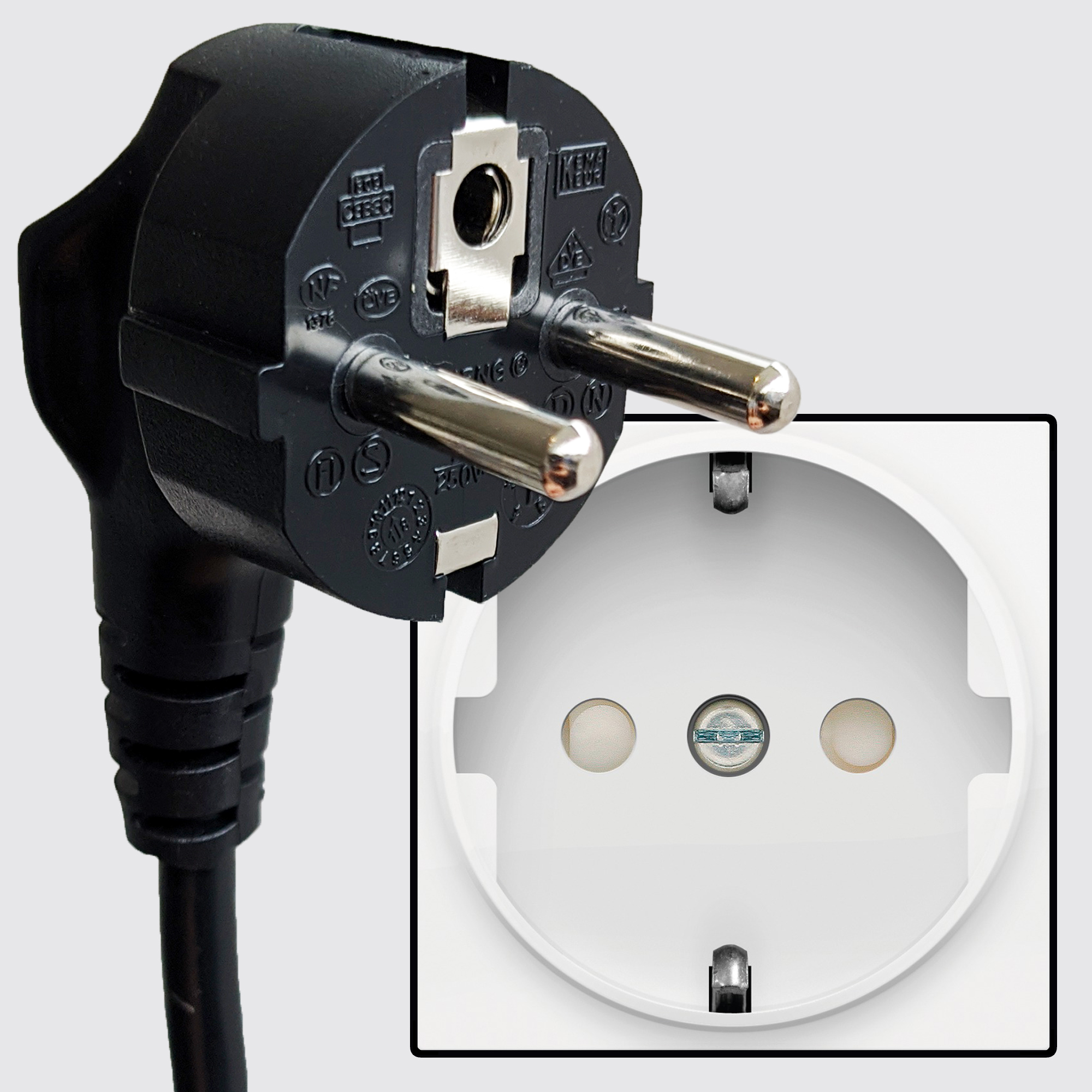
slaneesh_is_right@lemmy.org · 5 pts · 1y
J. They look good and the plug is small
BrowseMan@sh.itjust.works · 1 pts · 1y
You fit three of these in the same surface of one EU type
vatlark@lemmy.world · 1 pts · 1y
And if you don't have a ground pin it fits many EU plugs.
nickwitha_k@lemmy.sdf.org · 5 pts · 1y
I like type F for the symmetry. However, type K is smiling.
flamingo_pinyata@sopuli.xyz · 5 pts · 1y
Absolute best - G
Most practical as a common standard - F
jol@discuss.tchncs.de · 5 pts · 1y
The only thing G has best is the fuses, but the plug and socket shape is mid at best.
Pyr_Pressure@lemmy.ca · 5 pts · 1y
I think I would like Australia's over the rest.
The recessed circles I feel like they would gather dust and grime in there if you don't use it often and be tough to clean out.
I like the angles prongs as well as the switch to turn it off and on.
Alcoholicorn@mander.xyz · 4 pts · 1y
This is
ABetterTomorrow@sh.itjust.works · 4 pts · 1y
I declare RJ45 and USB C everything! But for big boi power….. no clue.
zymagoras777@lemmy.world · 4 pts · 1y
G
umbrella@lemmy.ml · 4 pts · 1y
thisnameisnottolong@piefed.au · 4 pts · 1y
Type H can fuck right off.
SuperCub@sh.itjust.works · 4 pts · 1y
Type K looks the happiest. Type I looks the hauntedest.
Ornadin@lemmy.world · 4 pts · 1y
Type K cause it looks like a happy face.
9point6@lemmy.world · 4 pts · 1y
G, you have to try really quite hard to electrocute yourself
BoxOfFeet@lemmy.world · 4 pts · 1y
Type B, H, or I. They look unpleasantly surprised by what I'm shoving in their mouths. Definitely not K, because he looks like he likes it.
LorIps@lemmy.world · 4 pts · 1y
Schuko (Type F)
Doubleohdonut@lemmy.ca · 4 pts · 1y
Type D is listed but not visually shown. Am I missing something?
Ek-Hou-Van-Braai@piefed.social · 4 pts · 1y
It looks the same as M, it's essentially just a smaller version of M.
It's hardly used anymore. It technically fits into M, but that's dangerous.
ordnance_qf_17_pounder@reddthat.com · 3 pts · 1y
Don't worry, we will give you the D later
Doubleohdonut@lemmy.ca · 2 pts · 1y
Heyo!
Horsey@lemmy.world · 3 pts · 1y
Type C has such a satisfying click when plugging something in.
boonhet@sopuli.xyz · 3 pts · 1y
My favourite is this one, it makes things go brrrrrr.
Couldn't find a good photo of the socket online, only the plug. Cba to go take a photo of the socket right now, but I do have it at home and it's fully functional.
Edit: Searching in Estonian yielded results for the socket too. Someone was auctioning a set 7 years ago.
0x0@lemmy.zip · 3 pts · 1y
I'll fetch the popcorn.
Olap@lemmy.world · 3 pts · 1y
G - safest
Ek-Hou-Van-Braai@piefed.social · 6 pts · 1y
Does this account for injuries from stepping on them?
ThePyroPython@lemmy.world · 2 pts · 1y
Why would you step on them?
You can just turn them off at the socket. And if you need extra sockets, just buy an extension.
Literally zero reason to leave a plug lying on the ground.
blackbrook@mander.xyz · 2 pts · 1y
Do you not live in a world where sometimes non-zero time elapses between realizing you need a thing and procuring that thing?
boletus@sh.itjust.works · 4 pts · 1y
What makes them safer than the others?
roofuskit@lemmy.world · 7 pts · 1y
https://youtu.be/UEfP1OKKz_Q
Ek-Hou-Van-Braai@piefed.social · 4 pts · 1y
I'd like to see a real world comparison between its safety and Type-F
Both are extremely safe
roofuskit@lemmy.world · 1 pts · 1y
Do you have a similar breakdown video of the features? I've never seen a rundown of them.
Ek-Hou-Van-Braai@piefed.social · 2 pts · 1y
No but I found this haha Why Tom Scott Is WRONG About The British Plug
roofuskit@lemmy.world · 1 pts · 1y
I just found this one. https://youtu.be/tx5NzxJjT0Q
It seems like they're mostly comparable but the schuko might be a bit safer. As someone in the US the lack of polarity would be an issue for us. But I still think our plug designs are the absolute worst.
Ek-Hou-Van-Braai@piefed.social · 3 pts · 1y
Nice find, IMO the Type F plugs are near perfect. Type N might technically be better because it's smaller, but it's got poor adoption. Sadly the EU canceled their plans to adopt it.
Olap@lemmy.world · 3 pts · 1y
Earth pin has a mechanism to prevent kids inserting shit essentially
fullsquare@awful.systems · 4 pts · 1y
C/E/F also have shutters, probably more types do that too
boletus@sh.itjust.works · 2 pts · 1y
Don't a bunch of them, like I, have an earth pin?
Olap@lemmy.world · 4 pts · 1y
The video explains it better than I could. But there is a cover mechanism that only opens when the longer earth pin is inserted
LazyGit@feddit.org · 5 pts · 1y
And if you have a bic ball pen lid handy you can insert a type F with a little bit of determination as well.
Do not try at home, obviously
boletus@sh.itjust.works · 2 pts · 1y
Oh that's pretty cool. Closest thing I've seen to that in AU is a socket you have to twist from the ground port to access but it's definitely not standard.
intrapt@sh.itjust.works · 1 pts · 1y
executivechimp@discuss.tchncs.de · 1 pts · 1y
Zak@lemmy.world · 3 pts · 1y
I like the USA type-A plug. That's probably not a popular answer since I see lots of comments about safety features in the other plugs, but my focus is on convenience.
The plugs are small, making it much easier to design folding-plug devices like this one. It also means that cords don't have a bulky knob on the end, and splitters and power strips can be smaller than other plugs - much smaller than Schuko type-C or UK type-G.
The most common objection is that it's possible for live pins to be exposed when a device is partially plugged in. That's true, and most people who grew up around them has been shocked that way once. Few have been shocked twice, as the lesson to be careful with electricity usually forms a lasting memory.
Ek-Hou-Van-Braai@piefed.social · 10 pts · 1y
The US uses 120V getting shocked by that once or twice can't be fun. But, the vast majority of the world uses 230V getting shocked by that would be a lot less fun.
Depending what you're into of course
Zak@lemmy.world · 4 pts · 1y
I've been shocked with both. I can confirm 230V hurts more. Neither is likely to result in a medically significant injury with this kind of shock though - just momentary discomfort.
MotoAsh@lemmy.world · 4 pts · 1y
Zak@lemmy.world · 1 pts · 1y
These shocks are almost always to a single finger.
MotoAsh@lemmy.world · 2 pts · 1y
LifeInMultipleChoice@lemmy.world · 3 pts · 1y
Growing up in the U.S. Ive never been able to shock myself plugging in a type A or B connection. 35 years in and never met someone in person who had ever complained about doing so. Now dryer plugs annoy me. They are the 220/240v, and I know there are at least 3 different types. So I've had to swap the power cords on the dryer in every place I've lived in. (I just keep the old ones). But if you rent a place built in 1970, 1985, and 2010 (random dates). They will all likely have different outlets.
JcbAzPx@lemmy.world · 2 pts · 1y
Usually it's from a lack of maintenence causing the receptacle to loosen leaving part of the plug exposed.
fullsquare@awful.systems · 2 pts · 1y
I think that type A plug would be greatly improved in terms of safety and mechanically if it was put in a grounded metal shroud, in style of DIN connector https://en.wikipedia.org/wiki/DIN_connector it still would be compact, smaller than type F
Schlemmy@lemmy.ml · 2 pts · 1y
Type E is inverted in the picture.
Dark_Soul@lemmy.zip · 2 pts · 1y
Its India 🇮🇳 Because its easy to use.
okrakai@lemmy.ml · 2 pts · 1y
what's type D, ??
falynns@lemmy.world · 2 pts · 1y
B is mounted upside down. Also the prongs get bent easily. So definitely not B.
Mike_Hunt@lemmy.ml · 2 pts · 1y
Everything else falls out with a light breeze, G is the way forward.
someguy3@lemmy.world · 2 pts · 1y
This is one of those things I can't believe hasn't been standardized. Why???
As for the question, the one I grew up with type B. All others seems weird to me.
Venus_Ziegenfalle@feddit.org · 10 pts · 1y
Type B is objectively inferior. This is not anti-americanism either, Technology Connections has my back here. But it's not bad enough to replace three big countries worth of plugs and outlets. The only way to have a global standard would be something like Italy's plug orgy system where you can fit multiple different types but that would kinda defy the purpose.
someguy3@lemmy.world · 1 pts · 1y
The criticisms of type B are so minor, it reaches so hard.
Honytawk@feddit.nl · 2 pts · 1y
All of them work as they should, or they would have been replaced a long time ago.
But there definitely are differences, and one is better than the rest.
someguy3@lemmy.world · 0 pts · 1y
I don't think that's a real argument. There are plenty of things that suck and the reason they don't change is because of inertia, not because it works well. See Qwerty, Azerty, Qwertz.
JcbAzPx@lemmy.world · 1 pts · 1y
If there's an American plug to be criticized, it's the Edison plug.
Surp@lemmy.world · -2 pts · 1y
So you say technology connections has your back but you didn't even say why it's inferior my first thought is you have no idea why. It just seems dumb posting that without any sorta proof.
Venus_Ziegenfalle@feddit.org · 3 pts · 1y
Cool
ryathal@sh.itjust.works · 10 pts · 1y
It has been standardized, but like most standard there are competing ones.
lime@feddit.nu · 4 pts · 1y
it's been standardized multiple times! the Italian outlets look like that to be backwards compatible with their older standard, where different amperages had different plugs.
mrgoosmoos@lemmy.ca · 2 pts · 1y
not type B, the tolerances aren't tight enough, and sometimes even if you have the wide/narrow pins the right way, it'll still refuse to go in
kablammy@sh.itjust.works · 2 pts · 1y
I couldn't plug in an adaptor in what seemed to be the correct way, in a Sri Lankan hotel (type M), but it went in ok when I rotated it. As soon as it went in, the power went out in the entire hotel. It was out for the rest of the night, and as I went up the street the next morning, there was a crew working on a transformer a few blocks away. Coincidence?
Also, at the place I was working, there were 2 other types of power plug than type M. WTF?
tehn00bi@lemmy.world · 2 pts · 1y
The UK plug is over engineered and looks like something from a steampunk universe, but I think it’s the best plug overall.
OneWomanCreamTeam@sh.itjust.works · 2 pts · 1y
Clearly type K. It's such a happy lil guy
Harry_h0udini@lemmy.dbzer0.com · 2 pts · 1y
Type-M, as I live there. Very convenient, all pins round shaped
Oberyn@lemmy.world · 1 pts · 1y
Like Type A's simplicity
markuswerle@nrw.social · 1 pts · 1y
@Ek-Hou-Van-Braai German Schuko of course.
BuboScandiacus@mander.xyz · 1 pts · 1y
Italy shakin'
HelloHotel@lemmy.world · 1 pts · 1y
Type-A is theoretically the easiest and cheapest thing to manufacture the male end of.
m3t00@lemmy.world · 1 pts · 1y
safety-wise, type F is used with 240v. less likely to touch prongs. they are different to keep from plugging in incompatible devices from other systems.
vane@lemmy.world · 1 pts · 1y
As far as I know you can push 240V device to any of those holes. Not saying it will work but ex. charger will charge, just slower.
MTK@lemmy.world · 1 pts · 1y
Tom Scott already answered this
https://www.youtube.com/watch?v=UEfP1OKKz_Q
jaschen306@sh.itjust.works · 1 pts · 1y
Japan and Taiwan are the same plug but they use 100V and we are 110V.
irelephant@lemmy.dbzer0.com · 1 pts · 1y
Therobohour@lemmy.world · 1 pts · 1y
https://m.youtube.com/watch?v=UEfP1OKKz_Q
Sunsofold@lemmings.world · 1 pts · 1y
Glancing over the images... Hmm, okay... Israel being a bit weird... Recessed is definitely better... what the type L is that?
Vinstaal0@feddit.nl · 0 pts · 1y
Wasn't the best one the Type G one? Except that companies need to learn to make the head of the plugs round so they cannot land with the pins up.
stinky@redlemmy.com · 0 pts · 1y
Epstein Files
ZC3rr0r@lemmy.ca · -1 pts · 1y
reddig33@lemmy.world · -10 pts · 1y
USB. Most things don’t need AC power. We can get rid of wall warts and create a universal standard by including USB C ports on AC plugs.
cepelinas@sopuli.xyz · 4 pts · 1y
On my way to power my fridge and oven by usb-c!
vaionko@sopuli.xyz · 4 pts · 1y
Oh yeah let's power my 2000W kettle from USB
blackbrook@mander.xyz · 0 pts · 1y
Yeah it's not like USB standard changes every few years or anything.